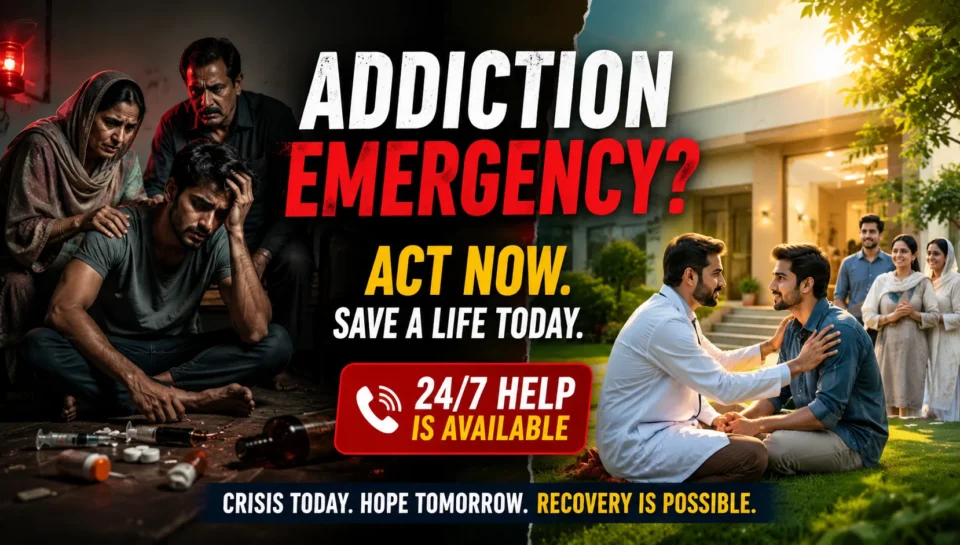
Someone you love is in crisis. Or maybe it’s you. Either way, you need to know exactly what to do in the next 60 minutes and this guide will tell you.
In Pakistan, addiction affects millions of families, yet most people don’t know where to turn when things become an emergency. The best rehab centre in Islamabad and Rawalpindi can help but first, you need to understand the warning signs, the steps to take, and how to access help at any hour of the day or night.
What Counts as an Addiction Emergency?
Not every crisis looks the same. Some are loud and obvious. Others are quiet and slow but just as dangerous.
You are dealing with an addiction emergency if you notice:
- Unconsciousness or inability to wake the person up
- Breathing that is slow, shallow, or has stopped
- Blue or pale lips and fingertips
- Seizures or uncontrolled shaking
- Extreme confusion, paranoia, or hallucinations
- Chest pain alongside drug or alcohol use
- Threats of self-harm or suicide linked to substance use
If any of these signs are present, call the Rescue helpline (1122) or Edhi Foundation (115) immediately before doing anything else.
For situations that are serious but not immediately life-threatening such as a relapse after treatment, withdrawal symptoms, or a loved one refusing to stop an emergency admission to a rehabilitation centre in Islamabad or Rawalpindi is the right next step.
Step-by-Step: What to Do Right Now
Step 1: Stay Calm and Assess the Situation
Panic makes things worse for everyone involved. Take a breath.
Ask yourself: Is this a medical emergency requiring an ambulance? Or does the person need professional detox and rehabilitation support?
Your answer determines your first call.
Step 2: Call a 24/7 Helpline or Rehab Centre Directly
Most reputable addiction treatment centres and psychiatric treatment centres in Islamabad operate around the clock. They have trained staff who handle emergency calls every day.
When you call, be ready to share:
- The person’s name and approximate age
- What substance(s) they have used and how much (if known)
- How long they have been using
- Any existing medical or psychiatric conditions
- Their current physical state
The staff will guide you on whether the person needs emergency hospital care first or can be admitted directly to the rehabilitation centre islamabad.
Step 3: Do Not Leave the Person Alone
Whether they are intoxicated, withdrawing, or in emotional crisis staying with them matters.
You do not need to have all the answers. Your presence alone reduces the risk of a tragic outcome. Keep them calm, keep them awake if possible, and keep them talking.
Step 4: Gather Documents and Essentials
While waiting for transport or an admission slot, prepare:
- A national identity card (CNIC) for the patient
- Any current medications or prescriptions
- A brief history of the addiction (how long, what substances)
- Emergency contact numbers
Having these ready speeds up the admission process significantly.
Step 5: Arrange Safe Transport
Do not let someone who is intoxicated or in withdrawal drive themselves.
Call a family member, trusted friend, or ask the rehab centre if they offer transport support. Many drug rehab centres in Islamabad have this service available for emergencies.
How to Choose the Right Rehab Centre in Islamabad Right Now
When time matters, you cannot afford to research for hours. Here is what to look for quickly.
Look for 24/7 Admissions
A genuine addiction treatment centre in Islamabad does not close at 5 PM. Addiction does not work office hours, and neither should the facility you choose.
Ask directly: “Can you admit someone tonight?”
If the answer is no or uncertain, move to the next centre.
Confirm They Handle Your Specific Need
Not all centres are the same. There are key differences between:
- Drug rehab centres — focused on substance use disorders (heroin, meth, cannabis, prescription drugs)
- Alcohol treatment centres — specialising in alcohol dependency and detox
- Psychiatric treatment centres — handling dual diagnosis cases where mental illness and addiction occur together
- Rehabilitation centres in Rawalpindi — serving patients from twin cities who need inpatient care close to home
Tell them exactly what you are dealing with. A good centre will either confirm they can help or refer you to someone who can.
Check for Medical Detox Support
Withdrawal from alcohol, benzodiazepines, and opioids can be medically dangerous even fatal without proper supervision.
Any best rehab centre in Islamabad worth trusting will have medical staff on site to manage detox safely. Ask specifically: “Do you have a doctor or nurse available during detox?”
What Happens After Emergency Admission?
Many families feel relief once their loved one is admitted. But recovery is a process, not a single event.
Here is a general picture of what to expect:
Detox Phase (Days 1–7)
The body clears the substance under medical supervision. This phase can involve physical discomfort, cravings, and mood swings.
A professional team monitors vital signs and manages withdrawal symptoms with appropriate care and, where necessary, medication.
Assessment and Treatment Planning (Week 1–2)
The centre’s clinical team conducts a full evaluation physical health, mental health history, trauma, family background, and addiction severity.
From this, a personalised treatment plan is created. No two patients are the same, and cookie-cutter programmes do not work long-term.
Therapeutic Rehabilitation (Weeks 2–12 and beyond)
This is the core of recovery. It typically includes:
- Individual therapy sessions (Cognitive Behavioural Therapy is widely used)
- Group therapy with peers in recovery
- Family counselling sessions
- Spiritual or faith-based support, if desired
- Life skills training to reduce relapse risk
A quality rehabilitation centre in Islamabad or Rawalpindi will also include structured daily routines, physical activity, and gradual reintegration planning.
Common Mistakes Families Make During an Addiction Crisis
Understanding what not to do is just as important.
Waiting for the person to “hit rock bottom” — This outdated idea costs lives. Early intervention leads to better outcomes. Do not wait.
Trying to handle detox at home — Withdrawing from alcohol or certain drugs without medical supervision is dangerous. Home detox without professional support increases the risk of seizures, cardiac events, and death.
Giving ultimatums without follow-through — Saying “get help or else” and then not acting on it teaches the person that there are no real consequences.
Choosing a centre based on price alone — The cheapest option is not always safe. Ask about staff qualifications, treatment methods, and licensing before deciding.
Neglecting the family’s mental health — Addiction affects the whole household. Look for centres that offer family therapy as part of the programme.
Why Rawalpindi and Islamabad Are Well-Served for Addiction Care
The twin cities have seen significant growth in professional addiction services over the past decade.
According to Pakistan’s National Institute on Drug Abuse statistics, an estimated 7.6 million people in Pakistan use drugs and the capital region is one of the most affected urban areas. This has driven demand for quality psychiatric and addiction care facilities.
Islamabad now hosts several licensed rehabilitation centres, psychiatric treatment centres, and specialised drug and alcohol treatment centres that meet international standards of care.
The best rehab centre in Islamabad will offer registered clinical staff, clean inpatient facilities, evidence-based treatment protocols, and transparent pricing with no hidden costs.
Questions to Ask Before You Admit a Loved One
Before finalising any admission, ask these five questions:
- Are you licensed by the relevant Pakistani health authority?
- Do you have a doctor or psychiatrist on staff (not just on call)?
- What is your approach to dual diagnosis (addiction plus mental health)?
- Do you involve families in the recovery process?
- What does your aftercare or relapse prevention programme look like?
If a centre hesitates, deflects, or cannot answer these clearly trust your instincts and look elsewhere.
Key Takeaways
Here is everything important from this guide in one place:
- If it is a medical emergency, call 1122 (Rescue) or 115 (Edhi) first.
- If it is serious but stable, call a rehabilitation centre in Islamabad or Rawalpindi directly and request emergency admission.
- Stay with the person, stay calm, and gather key documents while help is arranged.
- Choose a centre with 24/7 availability, medical detox support, and qualified staff.
- Avoid home detox from alcohol or opioids it can be life-threatening without supervision.
- Recovery takes time detox is only the beginning. A full programme including therapy, counselling, and aftercare gives the best long-term results.
- The best rehab centre in Islamabad will treat the whole person body, mind, and family not just the addiction.
Take Action Now
If you or someone you love needs help tonight, do not wait until morning.
Reach out to a trusted addiction treatment centre, drug rehab centre, alcohol treatment centre, or psychiatric treatment centre in Islamabad or Rawalpindi right now. The sooner help begins, the better the chances of a lasting recovery.
Have questions? Drop them in the comments below we read every one.