
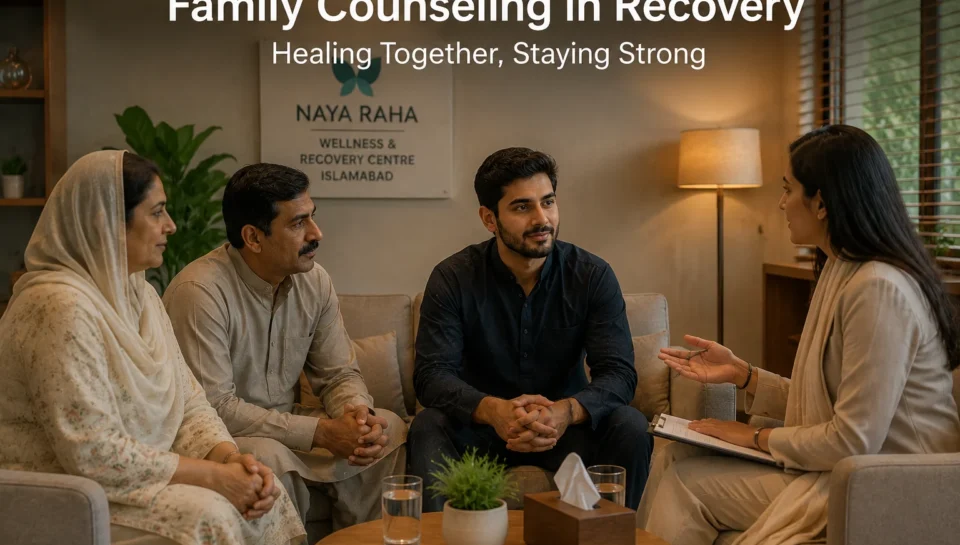
Introduction
Addiction does not affect only one person. It impacts the entire family emotionally, mentally, and socially. When a loved one struggles with substance abuse, families often experience broken trust, stress, confusion, and communication problems. Family counseling plays a major role in addiction treatment by helping families heal together and create a supportive environment for long-term recovery.
At a professional Rehabilitation centre in Islamabad, family involvement is considered an essential part of successful addiction recovery and relapse prevention.
What Is Family Counseling in Addiction Treatment?
Family counseling is a therapeutic approach that includes family members in the recovery process. It helps loved ones understand addiction as a medical and psychological condition while improving communication, emotional support, and family dynamics.
At a trusted Addiction treatment centre or Drug rehab centre, family counseling sessions may include:
- Education about addiction and recovery
- Guided communication exercises
- Conflict resolution strategies
- Emotional healing and support
- Healthy boundary setting
- Relapse prevention education
This approach helps families support recovery in healthier and more effective ways.
Why Family Involvement Matters in Recovery
1. Addiction Affects the Entire Family
Addiction changes family relationships, routines, and emotional stability. Family counseling helps everyone understand how substance abuse affects behavior and relationships while reducing blame, anger, and guilt.
At the Best rehab centre in Islamabad, recovery is viewed as a shared healing process for both the individual and the family.
2. Improves Communication
Addiction often creates silence, conflict, misunderstandings, and emotional distance. Counseling provides a safe environment where family members can:
- Express feelings respectfully
- Listen without judgment
- Rebuild honest communication
- Improve emotional understanding
Healthy communication strengthens trust and emotional connection during recovery.
3. Rebuilds Trust and Relationships
Trust is commonly damaged during addiction. Family counseling helps families:
- Address past emotional pain
- Encourage accountability
- Develop patience and understanding
- Restore emotional safety
Rebuilding trust creates a stronger foundation for long-term recovery at a professional Rehab centre in Islamabad.
4. Reduces the Risk of Relapse
Strong family support is one of the most effective protective factors against relapse. Counseling teaches families how to:
- Identify triggers and warning signs
- Respond with support instead of criticism
- Encourage healthy coping strategies
- Maintain a stable home environment
A supportive family system can significantly improve recovery outcomes at a Drug rehab centre or Alcohol treatment centre.
5. Educates Families About Addiction
Many families mistakenly view addiction as a lack of willpower or discipline. Counseling helps loved ones understand that addiction is a complex medical and mental health condition requiring professional treatment.
Professional education provided at a Psychiatric treatment centre helps families replace judgment with understanding and compassion.
6. Establishes Healthy Boundaries
Family members may unknowingly enable addictive behaviors. Counseling helps families learn how to:
- Set healthy emotional and behavioral boundaries
- Avoid enabling behaviors
- Support recovery without controlling the individual
- Encourage accountability in a healthy way
Healthy boundaries protect both the individual in recovery and their loved ones.
7. Supports Emotional Healing for Everyone
Addiction affects the emotional well-being of the entire family. Parents, spouses, siblings, and children may experience anxiety, anger, trauma, or emotional exhaustion.
Family counseling gives everyone the opportunity to heal emotionally while building stronger relationships and healthier coping skills.
Who Benefits from Family Counseling?
Family counseling can benefit:
- Parents of individuals in recovery
- Spouses and partners
- Children and siblings
- Extended family members involved in care
Healing becomes more effective when families recover together through professional support at a Rehabilitation centre in Rawalpindi or Islamabad.
When Should Family Counseling Begin?
Family counseling can begin at different stages of recovery, including:
- During inpatient rehab
- After detoxification
- During outpatient treatment
- Throughout relapse prevention planning
Early family involvement often leads to better treatment outcomes and stronger emotional support systems.
Challenges Without Family Counseling
Without proper family support, individuals in recovery may experience:
- Emotional isolation
- Increased stress and conflict
- Misunderstanding at home
- Lack of emotional support
- Higher relapse risk
Family counseling helps bridge these gaps and strengthens long-term recovery.
Why Choose HRCI Clinic?
At HRCI Clinic, we believe recovery is not only about overcoming addiction but also rebuilding relationships and emotional health. As a leading Rehab centre Islamabad, we provide:
- Family counseling services
- Personalized addiction treatment programs
- Psychiatric and mental health support
- Relapse prevention planning
- Holistic rehabilitation approaches
- Professional medical supervision
Our goal is to provide compassionate and effective care for individuals and families seeking recovery.
Conclusion
Family counseling is a cornerstone of effective addiction treatment. By improving communication, rebuilding trust, and educating loved ones, it creates a stronger foundation for lasting recovery. When families heal together, recovery becomes more sustainable, compassionate, and successful.
Addiction recovery is not just an individual journey. It is a family transformation.
Contact HRCI Clinic Today
Ready to take the first step toward recovery?
Contact our specialists for confidential support and personalized treatment.
📞 Call Now: 0331-5500090
🌐 Visit: www.hrci.pk