Introduction
Trauma is a deeply distressing experience that can leave long-lasting emotional and psychological effects. Events such as abuse, violence, accidents, loss, or prolonged stress can disrupt how the brain processes emotions, manages stress, and responds to safety.
If left untreated, trauma can significantly increase the risk of mental health disorders and substance addiction. Understanding this connection is essential for effective recovery and long-term healing, especially when seeking support from a rehabilitation centre in Islamabad or a rehabilitation centre in Rawalpindi.
What Is Trauma?
Trauma is an emotional and psychological response to a distressing or life-threatening event that overwhelms a person’s ability to cope.
Types of trauma include:
- Acute trauma – A single event such as an accident or assault
- Chronic trauma – Repeated exposure such as abuse or neglect
- Complex trauma – Long-term exposure, often beginning in childhood
Trauma affects both the mind and body, changing how individuals respond to stress and emotional triggers.
How Trauma Affects Mental Health
1. Anxiety Disorders
Trauma can lead to constant fear, panic attacks, and hypervigilance, making everyday life feel unsafe.
2. Depression
Unresolved trauma may result in hopelessness, emotional numbness, guilt, and loss of interest in daily activities.
3. Post-Traumatic Stress Disorder (PTSD)
PTSD may include flashbacks, nightmares, emotional triggers, and avoidance behaviors that disrupt normal functioning.
4. Emotional Dysregulation
Trauma can impair emotional control, leading to mood swings, anger, or emotional shutdown.
The Link Between Trauma and Addiction
1. Self-Medication
Many individuals use drugs or alcohol to numb emotional pain or reduce anxiety caused by trauma.
2. Changes in Brain Chemistry
Trauma affects stress hormones and reward systems in the brain, increasing vulnerability to addiction.
3. Avoidance Behavior
Substance use may become a way to avoid painful memories or emotions.
4. Higher Risk of Relapse
Without trauma-focused care, individuals are more likely to relapse during recovery.
Common Substances Used After Trauma
Individuals struggling with trauma may turn to:
- Alcohol
- Prescription sedatives
- Opioids
- Cannabis
- Stimulants
While these substances may provide temporary relief, they often worsen mental health conditions and increase addiction risk, requiring treatment at a drug rehab centre or alcohol treatment centre.
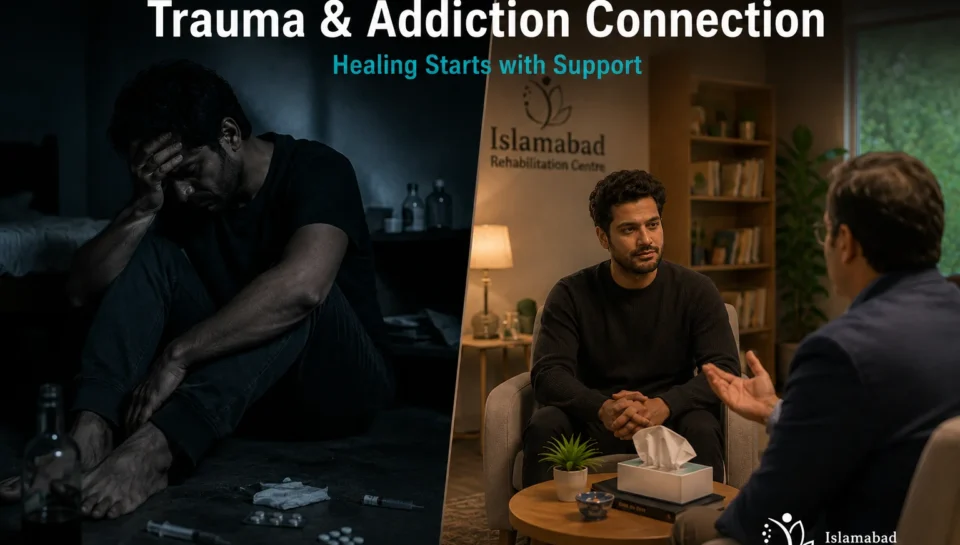
The Trauma Addiction Cycle
- Trauma causes emotional pain
- Substance use provides temporary relief
- Dependence develops over time
- Mental health conditions worsen
- Trauma symptoms become more intense
Breaking this cycle requires integrated treatment that addresses both trauma and addiction together.
Healing Trauma and Addiction Together
1. Trauma-Informed Therapy
Therapies such as CBT, EMDR, and trauma-focused counseling help individuals process traumatic experiences safely.
2. Mental Health Treatment
Treating conditions like anxiety, depression, or PTSD improves emotional stability and reduces dependency on substances.
3. Structured Rehabilitation Programs
A professional addiction treatment centre provides integrated care for both mental health and addiction recovery.
4. Healthy Coping Skills
Mindfulness, grounding exercises, journaling, and support groups help regulate emotions and reduce relapse risk.
When to Seek Professional Help
Professional support should be sought if trauma or substance use:
- Affects daily functioning
- Causes emotional numbness or distress
- Leads to dependence or withdrawal symptoms
- Results in isolation or risky behavior
Early intervention at a psychiatric treatment centre or rehab centre in Islamabad leads to better long-term recovery outcomes.
Conclusion
Trauma has a powerful impact on mental health and addiction, but recovery is possible. With trauma-informed care, emotional support, and professional treatment, individuals can heal and rebuild a stable, healthy life.
Recovery begins by addressing the root cause, not just the symptoms.
If you or a loved one needs help, support is available at a trusted rehab centre Islamabad.
Contact for Confidential Support
Call Now: +92 340 1531 371
Visit: HRCI Clinic