
Introduction
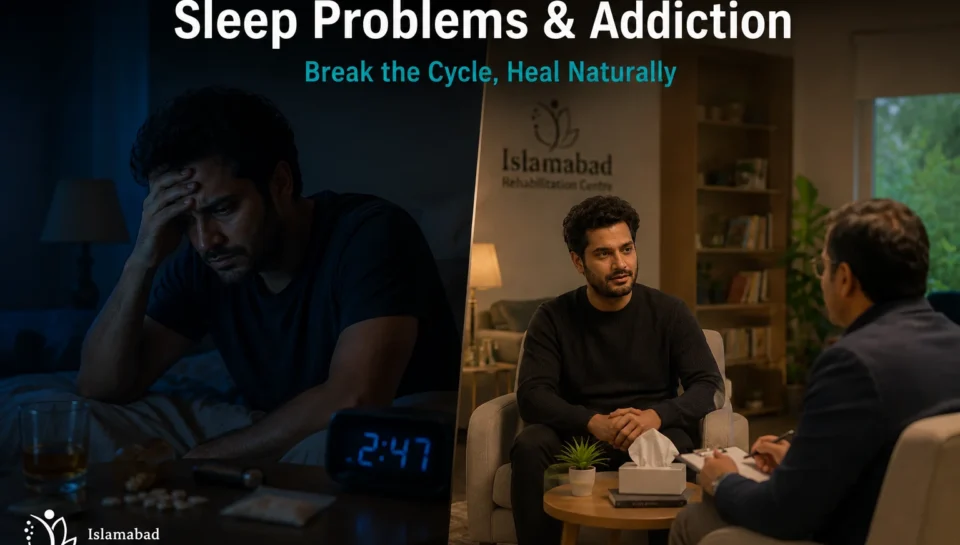
Sleep is essential for physical and mental well-being, yet millions of people struggle with insomnia, poor sleep quality, or disrupted sleep patterns. What is often overlooked is the strong connection between sleep problems and substance use, where each condition can worsen the other.
In Pakistan and worldwide, many individuals attempt to manage sleep issues by using sleeping pills, alcohol, or other substances. While this may provide temporary relief, it often leads to dependence and long-term health complications.
This article explains the relationship between sleep disturbances and substance use, why this cycle develops, and how it can be effectively broken with proper treatment and support at a Rehabilitation centre in Islamabad or Rehabilitation centre in Rawalpindi.
How Sleep Problems Can Lead to Substance Use
1. Self-Medication
People struggling with insomnia or stress often try to manage their symptoms using:
- Sleeping pills
- Sedatives
- Alcohol
- Anti-anxiety medications
- Opioids
Although these substances may provide short-term relief, they disrupt natural sleep cycles and can lead to dependency, often requiring support from a Drug rehab centre or Addiction treatment centre.
2. Stress, Anxiety, and Restlessness
Chronic stress and anxiety make it difficult to fall or stay asleep. Many individuals rely on substances to feel relaxed, but this often worsens sleep quality over time and increases emotional instability.
3. Lack of Mental Health Support
Due to stigma and lack of awareness, many people avoid professional help and instead rely on self-medication. Without proper care from a Psychiatric treatment centre, sleep issues can escalate into substance dependency.
How Substance Use Disrupts Sleep
1. Alters Brain Chemistry
Drugs and alcohol interfere with brain chemicals responsible for regulating sleep cycles and REM sleep, leading to:
- Poor sleep quality
- Frequent nighttime waking
- Daytime fatigue
2. Causes Rebound Insomnia
Once the effects of substances wear off, the brain becomes overstimulated, often causing more severe insomnia than before.
3. Worsens Sleep Disorders
Substance use can trigger or worsen conditions such as:
- Sleep apnea
- Restless legs syndrome
- Anxiety-related sleep disturbances
4. Creates a Dependency Cycle
Using substances to sleep leads to poor sleep quality, which increases stress and encourages further substance use. This cycle is difficult to break without professional support at a Rehab centre in Islamabad.
The Vicious Cycle: Poor Sleep → Substance Use → Worse Sleep
Sleep problems often lead to substance use. Substance use then worsens sleep quality, which further increases cravings and dependency.
Understanding this cycle is essential for early intervention and long-term recovery at a trusted Rehabilitation centre Islamabad.
Signs Someone May Be Stuck in This Cycle
Common warning signs include:
- Dependence on pills or alcohol to sleep
- Difficulty sleeping without substances
- Morning grogginess and fatigue
- Increased tolerance over time
- Mood swings and irritability
- Low energy during the day
If these symptoms continue, professional help from a Addiction treatment centre is strongly recommended.
Breaking the Cycle: Healthy and Effective Solutions
1. Cognitive Behavioral Therapy for Insomnia (CBT-I)
A scientifically proven approach that helps restore healthy sleep patterns without reliance on medication.
2. Relaxation Techniques
- Deep breathing exercises
- Meditation and mindfulness
- Progressive muscle relaxation
These techniques naturally calm the nervous system and improve sleep quality.
3. Sleep Hygiene Practices
- Maintaining a consistent sleep schedule
- Reducing screen time before bed
- Avoiding caffeine in the evening
- Creating a calm and comfortable sleep environment
4. Addressing Mental Health Conditions
Treating underlying issues such as anxiety, depression, or trauma significantly improves sleep and reduces dependency risks at a Psychiatric treatment centre.
5. Professional Detox and Rehabilitation Support
If substance use has already developed, medical detox, therapy, and structured rehabilitation programs are essential for restoring both sleep and overall health at a Drug rehab centre or Alcohol treatment centre.
Conclusion
The connection between sleep problems and substance use is strong and often underestimated. Attempting to manage sleep issues with substances can lead to a harmful cycle of dependency and worsening mental health.
However, with proper treatment, lifestyle changes, and professional support from a Best rehab centre in Islamabad, it is possible to break this cycle, restore natural sleep, and rebuild a healthier life.
Recovery is achievable with the right guidance and care.
Take the First Step
Contact our specialists today for confidential support and personalized treatment.
📞 Call Now: +92 340 1531 371
🌐 Visit: www.hrci.pk