Introduction
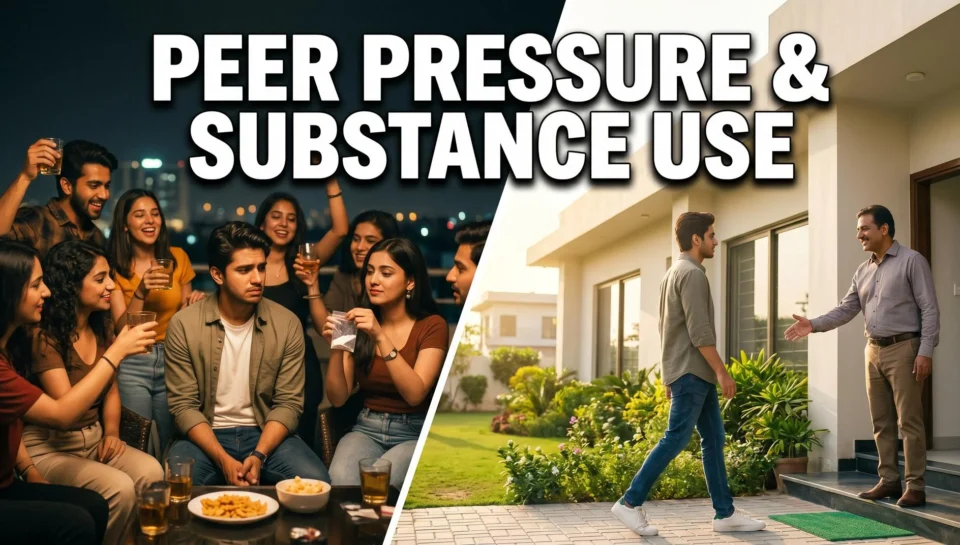
Peer pressure is one of the strongest social influences affecting human behaviour, especially substance use. It impacts teenagers and adults alike, often leading individuals to make choices that affect their health and future.
Understanding how peer influence works is essential for prevention and recovery. If substance use has already begun due to social pressure, professional help from a rehabilitation centre in Islamabad or an addiction treatment centre can support recovery.
What Is Peer Pressure?
Peer pressure is the influence people feel to match the behaviours, attitudes, or values of their social group.
It can be:
Positive Peer Pressure
Encourages healthy habits such as:
- Studying
- Exercising
- Avoiding harmful substances
Negative Peer Pressure
Encourages risky behaviours such as:
- Drug use
- Alcohol consumption
- Smoking
Types of Peer Pressure
1. Direct Peer Pressure
Occurs when someone directly encourages or challenges you:
- Everyone is doing it
- Try it once
2. Indirect Peer Pressure
Occurs through observation:
- Seeing friends use substances
- Feeling pressure to fit in without being asked
Why Peer Pressure Leads to Substance Use
Desire for Acceptance
People naturally want to belong to a group, which can lead to risky decisions.
Fear of Missing Out (FOMO)
Social events involving substances may create anxiety about exclusion.
Misperception of Norms
Many overestimate how common substance use actually is.
Identity Formation
Young people may associate substance use with popularity or maturity.
Warning Signs of Substance Use
Watch for:
- Sudden change in friends
- Declining school or work performance
- Isolation from family
- Mood swings or irritability
- Secretive behaviour
- Physical appearance changes
- Financial issues
- Drug-related items
Early detection can help prevent long-term addiction and may require support from a rehabilitation centre in Islamabad.
Risks of Peer-Influenced Substance Use
Health Risks
- Liver and heart damage
- Brain impairment
- Mental health disorders
Addiction Risk
Casual use can quickly develop into dependency requiring an addiction treatment centre.
Legal Issues
- Arrests
- Fines
- Criminal records
Academic and Career Impact
- Poor performance
- Loss of opportunities
Relationship Damage
- Loss of trust
- Family conflict
Mental Health Effects
- Anxiety
- Depression
- Psychosis in severe cases
Treatment may require a psychiatric treatment centre.
How to Resist Peer Pressure
Build Confidence
Know your values and stay firm in your decisions.
Use Simple Responses
- No thanks
- I don’t use drugs
- I’m focusing on my health
Choose Positive Friends
Surround yourself with supportive people.
Have an Exit Plan
Be ready to leave uncomfortable situations.
Focus on Goals
Keep long-term success in mind.
Seek Support
Talk to trusted adults or counsellors.
When to Seek Professional Help
Consider a drug rehab centre if:
- Substance use is hard to control
- Withdrawal symptoms appear
- Attempts to quit fail
- Responsibilities are neglected
- Use continues despite harm
Treatment Options
Detoxification
Medically supervised withdrawal process.
Inpatient Rehabilitation
Full-time structured recovery program.
Outpatient Treatment
Flexible treatment while continuing daily life.
Therapy & Counseling
Includes CBT and family therapy.
Medication-Assisted Treatment
For alcohol or opioid dependence.
Aftercare Support
Long-term relapse prevention planning.
Supporting Someone Facing Peer Pressure
- Communicate without judgement
- Listen actively
- Encourage professional help
- Avoid enabling behaviour
- Set healthy boundaries
- Take care of your own mental health
Choosing a Rehabilitation Centre
When selecting a rehab centre in Islamabad, consider:
- Licensing and accreditation
- Qualified medical staff
- Evidence-based therapies
- Dual diagnosis treatment
- Family involvement programs
- Strong aftercare support
- Location and accessibility
Conclusion
Peer pressure can strongly influence substance use, but it does not define a person’s future. With awareness, support, and timely intervention, recovery is always possible.
If needed, reaching out to a trusted rehabilitation centre in Islamabad or Rawalpindi can be the first step toward lasting recovery.