Introduction
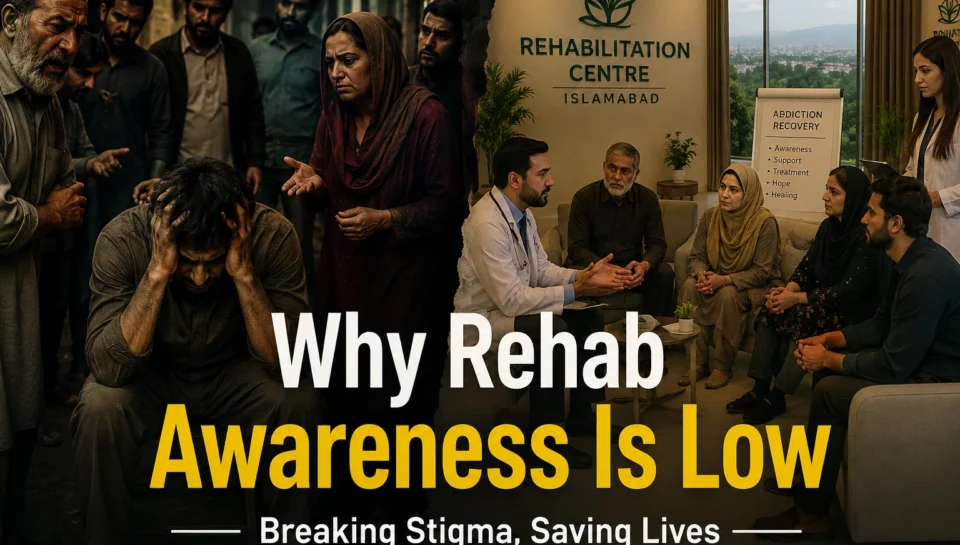
Rehabilitation services play a vital role in treating addiction, mental health disorders, and behavioral conditions. Despite their importance, awareness about rehab in Pakistan remains limited. Many people are still unsure about what a rehabilitation centre in Islamabad does, who needs treatment, and how recovery actually works.
This lack of awareness prevents individuals from accessing timely help at a drug rehab centre, or psychiatric treatment centre, even when professional care could significantly improve outcomes.
1. Cultural Stigma Around Mental Health and Addiction
One of the biggest challenges is social stigma.
- Addiction is often seen as a moral weakness rather than a medical condition
- Families avoid discussing mental health issues due to fear of judgment
- Conversations about therapy or rehab are still considered taboo in many communities
This stigma prevents people from learning about or visiting a rehabilitation centre in Rawalpindi or Islamabad when they need support.
2. Misconceptions About Rehab Treatment
There are several common myths about rehabilitation, such as:
- Rehab is only for extreme or “hopeless” cases
- Only drug users need treatment (ignoring alcohol and behavioral addictions)
- Rehab means isolation or punishment
- Medication alone is enough for recovery
These misunderstandings stop people from exploring proper care at a rehab centre in Islamabad or seeking help from an addiction treatment centre.
3. Lack of Public Education and Awareness
Public knowledge about rehabilitation services is still limited in Pakistan. Many people are unaware of:
- How rehab centres operate
- Signs that indicate professional help is needed
- How addiction is connected to mental health
- How to choose a reliable treatment facility
Without awareness campaigns, individuals remain unaware of options such as the best rehab centre in Islamabad or nearby services.
4. Limited Media Coverage
Media plays a major role in shaping public understanding, but coverage is often limited.
- Addiction is mostly reported in relation to crime
- Recovery stories and treatment awareness are rarely highlighted
- Educational content about rehab services is minimal
This reduces public exposure to positive narratives about recovery at a rehab centre Islamabad.
5. Weak Community Outreach Programs
Awareness at the community level is still underdeveloped.
- Schools rarely include addiction education
- NGOs and health departments conduct limited outreach
- Few structured awareness campaigns exist
6. Social and Religious Misconceptions
In many communities:
- Addiction is seen as a spiritual or moral issue only
- Families prefer non-medical solutions first
- Mental health discussions remain sensitive topics
While spirituality can support healing, it should complement, not replace, treatment at a psychiatric treatment centre.
7. Financial Misconceptions About Rehab
Many people wrongly believe that:
- Rehab is too expensive
- It is only for wealthy individuals
- It is available only in big cities
In reality, affordable care is available at many facilities, including a drug rehab centre in Islamabad or nearby cities like Rawalpindi.
8. Weak Integration in Healthcare System
Another major gap is limited coordination within healthcare:
- Doctors may not screen for addiction regularly
- Mental health referrals are often delayed
- Addiction treatment is not fully integrated into general healthcare
This leads many individuals to miss early treatment opportunities at a rehabilitation centre in Islamabad.
Consequences of Low Rehab Awareness
Poor awareness leads to serious outcomes:
- Delayed or no treatment
- Higher relapse rates
- Increased emotional and financial burden on families
- Rising untreated mental health conditions
- Unsafe self-treatment practices
Without awareness, many individuals continue to struggle without proper support.
How Rehab Awareness Can Be Improved
✔ Public Education Campaigns
- TV, radio, and social media awareness programs
- Collaboration with healthcare professionals and influencers
✔ School and Community Programs
- Education on mental health and addiction
- Awareness about early warning signs
- Information on where to seek help
✔ Sharing Recovery Stories
Real-life recovery stories reduce stigma and encourage others to seek help.
✔ Healthcare Training
Doctors and nurses should be trained to identify and refer addiction cases early.
✔ Government and NGO Collaboration
Stronger partnerships can improve outreach and access to treatment services.
Conclusion
Rehab awareness in Pakistan remains low due to stigma, misinformation, lack of education, and weak healthcare integration. However, this can change through consistent awareness efforts and open conversations.
Addiction is a treatable medical condition, not a moral failure. Increasing awareness about services like a rehabilitation centre in Islamabad, or psychiatric treatment centre can save lives and support long-term recovery.
Every step toward education is a step toward hope and healing.
Contact for Confidential Support
If you or a loved one needs help, professional treatment is available.
Call Now: +92 340 1531 371
Visit: HRCI Clinic