
Introduction
Internet addiction has become one of the fastest-growing behavioural issues worldwide, especially among young people. Constant access to smartphones, social media, gaming, and online entertainment makes it easy to lose track of time and develop unhealthy digital habits.
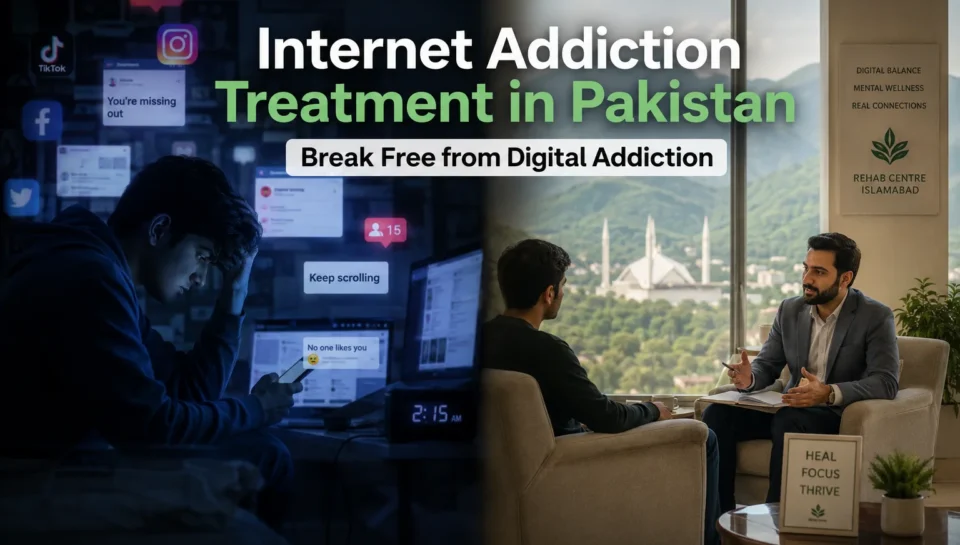
When online activity starts affecting daily life, relationships, work performance, or mental health, it may indicate internet addiction. This guide explains its signs, risks, and treatment options, especially in Pakistan, where awareness and access to a rehabilitation centre in Islamabad are increasingly important.
What Is Internet Addiction?
Internet addiction is a compulsive and uncontrolled need to stay online. A person may feel unable to reduce screen time even when it negatively affects their life.
Unlike normal internet use, it becomes a problem when it disrupts daily routines, emotional balance, and physical health.
Common Signs of Internet Addiction
Early recognition can prevent serious long-term consequences.
1. Loss of Control
Spending excessive time online without realizing it or being unable to stop.
2. Neglecting Responsibilities
Ignoring work, studies, or household duties due to online activities.
3. Mood Changes When Offline
Irritability, anxiety, or restlessness when not connected to the internet.
4. Using Internet to Escape Reality
Using online platforms to avoid stress, loneliness, or emotional problems.
5. Social Withdrawal
Preferring online interaction over real-life relationships.
6. Physical Symptoms
Eye strain, headaches, neck pain, and poor posture.
7. Sleep Problems
Difficulty sleeping due to late-night screen use or constant notifications.
Risks and Health Effects of Internet Addiction
Internet addiction affects every part of life, not just screen time.
Physical Health Issues
- Body pain and posture problems
- Eye strain and headaches
- Reduced physical activity leading to weight gain
- Weak immune system due to stress
Sleep Disorders
- Difficulty falling asleep
- Irregular sleep cycles
- Daytime fatigue
Mental Health Problems
- Anxiety and depression
- Low self-esteem
- Poor focus and concentration
- Emotional instability
Impact on Daily Life
- Relationship conflicts
- Poor academic or job performance
- Financial stress from online spending
- Reduced productivity
How Internet Addiction Affects Mental Health
Excessive internet use increases stress levels, reduces real-life interaction, and creates emotional dependency on online validation.
In severe cases, it can contribute to anxiety disorders, depression, and other behavioural conditions requiring support from a psychiatric treatment centre or addiction specialist.
Treatment Options for Internet Addiction
Effective treatment combines therapy, lifestyle changes, and professional care at a drug rehab centre or addiction treatment centre.
1. Cognitive Behavioral Therapy (CBT)
Helps identify triggers and develop healthier thinking patterns.
2. Digital Detox
Gradual reduction in screen time and structured offline routines.
3. Healthy Lifestyle Changes
- Regular exercise
- Outdoor activities
- Balanced sleep schedule
- Reduced screen exposure
4. Professional Counseling
Addresses underlying emotional issues like stress, anxiety, or depression.
5. Structured Rehab Programs
A rehabilitation centre in Islamabad or Rawalpindi provides supervised recovery, therapy, and monitoring.
6. Relapse Prevention
Teaches coping strategies and healthy digital boundaries.
Why This Matters in Pakistan
With increasing internet usage, many teenagers and young adults in Pakistan are at risk of digital dependency. Awareness, early diagnosis, and access to a rehabilitation centre islamabad can significantly reduce long-term harm.
Specialized rehab centres in Islamabad and Rawalpindi now include behavioral addiction treatment as part of their programs.
Final Thoughts
Internet addiction is a real and growing mental health concern, but recovery is possible. With early intervention, professional therapy, and structured support from a rehab centre in Islamabad, individuals can regain balance and rebuild healthy lives.
Seeking help is not a weakness it is the first step toward recovery.