
Introduction
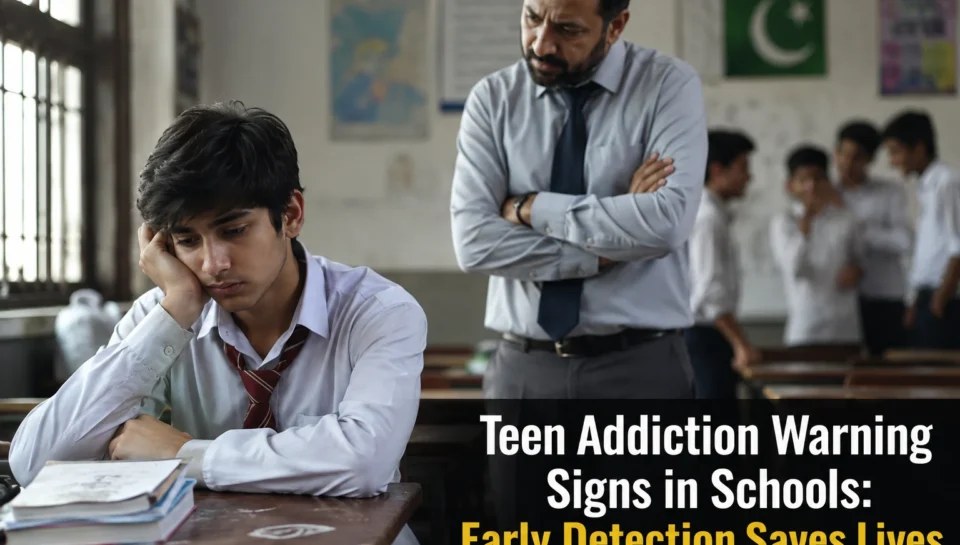
Teen mental health is becoming an increasing concern in Pakistan, especially due to rising social media use, academic pressure, peer influence, and easier access to addictive substances. Schools are often the first environment where early signs of addiction become visible, making timely awareness and intervention essential.
Understanding these warning signs can help parents, teachers, and school counselors act early before the situation worsens.
Why Teen Addiction Is Increasing in Pakistan
Several factors are contributing to higher addiction risks among teenagers:
- Academic stress and performance pressure
- Excessive smartphone and social media use
- Peer pressure and curiosity
- Lack of mental health awareness
- Easy availability of drugs, vaping products, and alcohol
- Untreated anxiety, depression, or trauma
Without timely support, experimentation can quickly develop into dependency.
Early Warning Signs of Addiction in Schools
1. Behavioural Changes
- Sudden irritability or aggression
- Lying or secretive behaviour
- Loss of interest in hobbies or sports
- Frequent conflicts with teachers or classmates
2. Academic Decline
- Falling grades
- School absenteeism or skipping classes
- Difficulty concentrating
- Reduced motivation toward studies
3. Emotional and Mental Health Red Flags
- Anxiety, depression, or mood swings
- Social withdrawal or isolation
- Low self-esteem or hopelessness
- Sudden emotional outbursts
Many teenagers may turn to substances as a way to cope with untreated emotional or psychological issues.
Physical Warning Signs
- Bloodshot eyes or unusually dilated pupils
- Sudden weight changes
- Poor hygiene or body odour
- Frequent fatigue or sleeping during class
Role of Schools in Early Prevention
Schools play an important role in identifying and preventing addiction:
- Training teachers to recognize warning signs
- Providing access to school counselors or psychologists
- Conducting mental health awareness programs
- Encouraging open communication with students
- Collaborating with professional rehabilitation centers
How Parents Can Support Their Teen
- Maintain open and non-judgmental communication
- Observe behavioral and routine changes
- Avoid harsh punishment and focus on understanding
- Seek professional help if warning signs persist
Early intervention can prevent long-term addiction and mental health complications.
When to Seek Professional Help
If a teenager shows persistent behavioural, emotional, or physical changes, professional support is necessary. A qualified rehabilitation and psychiatric treatment centre can provide:
- Mental health assessments
- Counseling and therapy
- Family support programs
- Addiction prevention and recovery planning
Teen Mental Health Support in Islamabad
A trusted best rehab centre in Islamabad offers:
- Confidential and safe treatment environment
- Experienced psychiatrists and therapists
- Teen-focused mental health programs
- Long-term recovery and relapse prevention support
Early support can significantly improve outcomes and protect a teen’s future.
Conclusion
Teen addiction is not a moral failure but a mental health condition that requires awareness, compassion, and timely intervention. By recognizing early warning signs in schools, parents and educators can protect young people and guide them toward healthier choices.
If you suspect a teen is struggling, seeking help early can make a life-changing difference.