Introduction
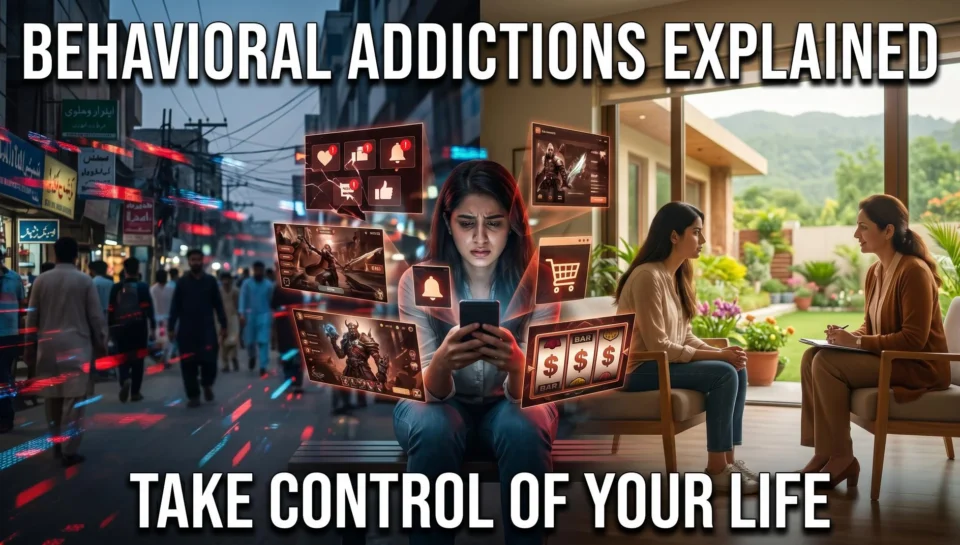
When people think of addiction, they often associate it with drugs or alcohol. However, addiction is not limited to substances. Many individuals struggle with behavioral addictions (process addictions), where compulsive behaviors activate the brain’s reward system in a similar way to drugs.
These addictions can significantly affect mental health, relationships, productivity, and overall quality of life. With growing awareness, it is important to understand behavioral addictions and how professional care at a rehabilitation centre in Islamabad or psychiatric treatment centre can help.
What Are Behavioral Addictions?
Behavioral addictions occur when a person becomes dependent on a specific activity that triggers pleasure or relief. Over time, the behavior becomes uncontrollable despite negative consequences.
Common signs include:
- Loss of control over behavior
- Anxiety or irritability when stopping the activity
- Using behavior to escape stress or emotions
- Decline in work, studies, or relationships
- Excessive time or money spent on the activity
Without treatment, these addictions can become chronic and disruptive.
Types of Behavioral Addictions
1. Internet Addiction
Excessive online activity that affects sleep, responsibilities, and social life.
Warning signs:
- Spending excessive time online
- Ignoring responsibilities
- Feeling restless without internet
2. Smartphone Addiction
Constant phone checking and dependence on mobile apps, especially among youth.
Effects:
- Poor concentration
- Anxiety and sleep issues
- Social withdrawal
3. Gaming Addiction
Recognized by the WHO as Gaming Disorder.
Symptoms:
- Prioritizing gaming over daily tasks
- Loss of interest in other activities
- Poor time control
4. Gambling Addiction
Compulsive betting behavior that leads to financial and emotional harm.
Red flags:
- Chasing losses
- Borrowing money
- Hiding gambling behavior
5. Shopping Addiction
Impulse buying used to cope with stress, leading to debt and guilt.
6. Social Media Addiction
Overuse of platforms driven by dopamine response.
Effects:
- Low self-esteem
- Comparison anxiety
- Reduced productivity
7. Work Addiction (Workaholism)
Excessive focus on work that damages health and relationships
8. Food Addiction
Compulsive eating of high-sugar or high-fat foods linked to emotional coping.
Causes of Behavioral Addictions
Behavioral addictions often develop due to:
- Brain chemistry and dopamine release
- Emotional stress or trauma
- Genetic vulnerability
- Environmental influences
- Mental health conditions such as anxiety or depression
Understanding the cause helps guide effective treatment at an addiction treatment centre.
Effects on Daily Life
Behavioral addictions can impact:
- Mental health (stress, anxiety, depression)
- Physical health (fatigue, sleep problems)
- Relationships (conflict, isolation)
- Work and studies (poor focus, low productivity)
- Financial stability (overspending, debt)
Treatment for Behavioral Addictions
Effective treatment focuses on behavior change and emotional healing.
1. Cognitive Behavioral Therapy (CBT)
Helps identify triggers and build healthier thought patterns.
2. Counseling & Psychotherapy
Addresses emotional causes of addiction.
3. Family Therapy
Strengthens support systems and improves communication.
4. Behavior Modification
Encourages structured routines and self-control.
5. Medication (if required)
Used to treat underlying anxiety or depression.
6. Support Groups
Reduces isolation and builds accountability.
7. Digital Detox Programs
Especially useful for internet and smartphone addiction.
Professional care at a drug rehab centre or rehab centre in Rawalpindi improves recovery outcomes.
Prevention of Behavioral Addictions
- Limit screen time
- Practice mindful behavior
- Set healthy boundaries
- Identify early warning signs
- Seek help early from a rehabilitation centre near me
Conclusion
Behavioral addictions are real and increasingly common in today’s digital world. They can silently disrupt life if left untreated, but recovery is possible with early intervention and professional support.
Rehabilitation services, including a rehab centre in Islamabad or alcohol treatment centre, provide structured programs to help individuals regain control and rebuild their lives.
Contact for Confidential Support
Call Now: +92-340-1531-371
Visit: HRCI Clinic