Introduction Rehabilitation services play a crucial role in helping individuals overcome addiction, mental health challenges, and behavioral disorders. However, in Pakistan, awareness about rehab how it works, who needs it, and why it matters remains surprisingly low. This lack of awareness prevents many people from accessing the help they desperately need. In this article, we …


Introduction
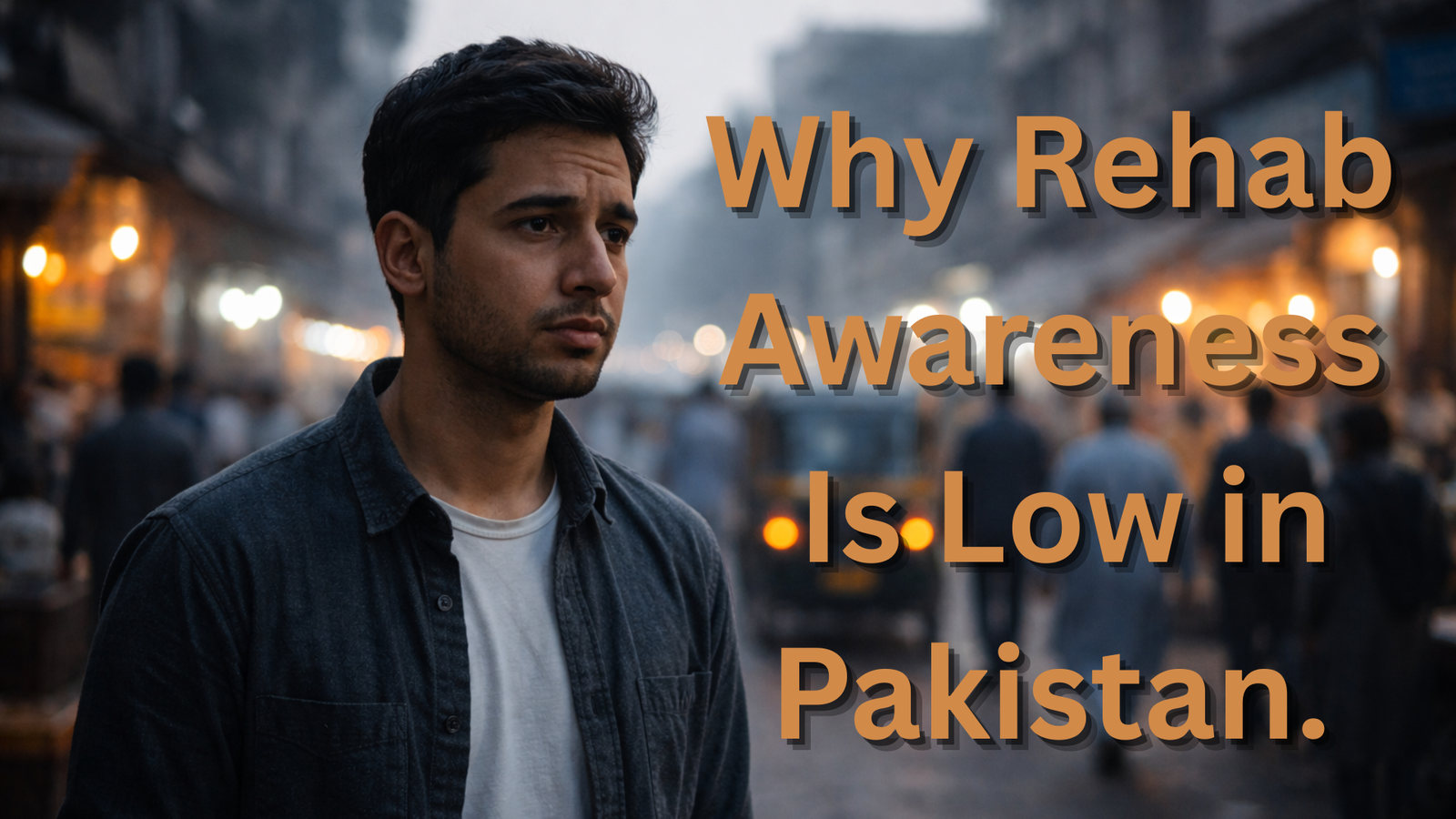
Rehabilitation services play a crucial role in helping individuals overcome addiction, mental health challenges, and behavioral disorders. However, in Pakistan, awareness about rehab how it works, who needs it, and why it matters remains surprisingly low. This lack of awareness prevents many people from accessing the help they desperately need.
In this article, we explore the key reasons behind low rehab awareness in Pakistan, the consequences of this gap, and what can be done to improve public understanding and access to care.
1. Cultural Stigma Around Mental Health & Addiction
One of the biggest barriers to rehab awareness in Pakistan is stigma.
-
Many people view addiction as a moral failing rather than a medical condition.
-
Families often keep issues private due to fear of judgment.
-
Discussion of substance abuse, trauma, or therapy is often considered taboo.
This stigma prevents open conversation and discourages people from seeking or learning about treatment options.
2. Misconceptions About Rehab and Treatment
There are widespread misunderstandings that:
-
Rehab is only for “extreme cases.”
-
Only drug addicts need rehab (ignoring alcohol, prescription misuse, behavioral addictions).
-
Rehab means isolation or punishment.
-
Medication alone can cure addiction.
Such misconceptions make people reluctant to explore rehab as a valid solution.
3. Lack of Public Education and Information
Compared to many countries, Pakistan has limited public health campaigns on:
-
What rehab centers do
-
How to choose a reputable rehab
-
How addiction ties to mental health
-
Signs that someone needs professional help
Without clear, accessible information, people remain unaware of their options.
4. Limited Media Coverage
In many regions, media either:
-
Avoids coverage on addiction and rehab, or
-
Only reports on drug cases when linked to crime
Rarely does media provide educational content on recovery journeys, treatment success stories, or expert guidance.
This reduces public exposure to positive, informational narratives about rehab.
5. Scarcity of Community Outreach Programs
There’s a lack of structured awareness campaigns by:
-
Government health departments
-
Schools and educational institutions
-
Local communities and NGOs
Community workshops, seminars, and school programs can greatly improve knowledge but such initiatives are sparse.
6. Religious and Social Perceptions
In many communities:
-
Addiction is seen as a test of faith or moral weakness.
-
People prefer spiritual remedies only, rather than professional treatment.
-
There’s resistance to discussing issues considered “family problems.”
While faith and spirituality can be supportive, they should ideally complement not replace professional rehab.
7. Economic Barriers and Misunderstandings
Many people assume rehab is:
-
Too expensive
-
Only accessible to the wealthy
-
Only available in large cities
This belief discourages families from exploring available resources or asking professionals for help.
8. Insufficient Integration in Healthcare
Often:
-
Primary healthcare providers do not screen for addiction
-
Mental health services are not integrated with general health
-
Referral systems to rehab are weak or non-existent
This disconnect means many individuals fall through the cracks without timely intervention.
Consequences of Low Rehab Awareness
Low awareness contributes to:
-
Delayed or no treatment
-
Higher rates of relapse
-
Increased burden on families
-
Rise in untreated mental health issues
-
Unsafe “self-treatment” practices
Without awareness, stigma persists and people continue to suffer in silence.
How Rehab Awareness Can Be Improved
To bridge the awareness gap:
✔ Launch Public Education Campaigns
Involving:
-
Television and radio
-
Social media influencers
-
Healthcare professionals
✔ School and Community Programs
Teaching youth about:
-
Healthy coping mechanisms
-
Early signs of addiction
-
Where to seek help
✔ Share Real Recovery Stories
Humanizing addiction can dismantle stigma and encourage empathy.
✔ Strengthen Healthcare Screening
Training doctors and nurses to recognize and refer addiction cases.
✔ Government and NGO Collaboration
Public-private partnerships can expand outreach and reduce barriers to care.
Conclusion
Rehab awareness in Pakistan is low due to a complex mix of stigma, misconceptions, limited public education, and healthcare gaps. But it doesn’t have to stay that way. With sustained effort, open dialogue, and informed communities, Pakistan can create a culture that understands addiction as a treatable health condition not a moral weakness.
Improved awareness saves lives. And every step toward education is a step toward hope.
Ready to take the first step toward recovery?
Contact our specialists today for confidential help and personalized treatment.
 Call Now: 0331-5500090
 Visit: www.hrci.pk