Introduction Drug addiction is a growing public health concern in Pakistan, affecting individuals across all ages, backgrounds, and communities. Unfortunately, misinformation and stigma often prevent people from seeking help. Understanding the truth is essential for awareness, prevention, and effective treatment. Below are some of the most common myths followed by the facts that correct them. …


Introduction
Drug addiction is a growing public health concern in Pakistan, affecting individuals across all ages, backgrounds, and communities. Unfortunately, misinformation and stigma often prevent people from seeking help. Understanding the truth is essential for awareness, prevention, and effective treatment.
Below are some of the most common myths followed by the facts that correct them.
Myth 1: Drug addiction is a moral failure or lack of willpower.
Fact:
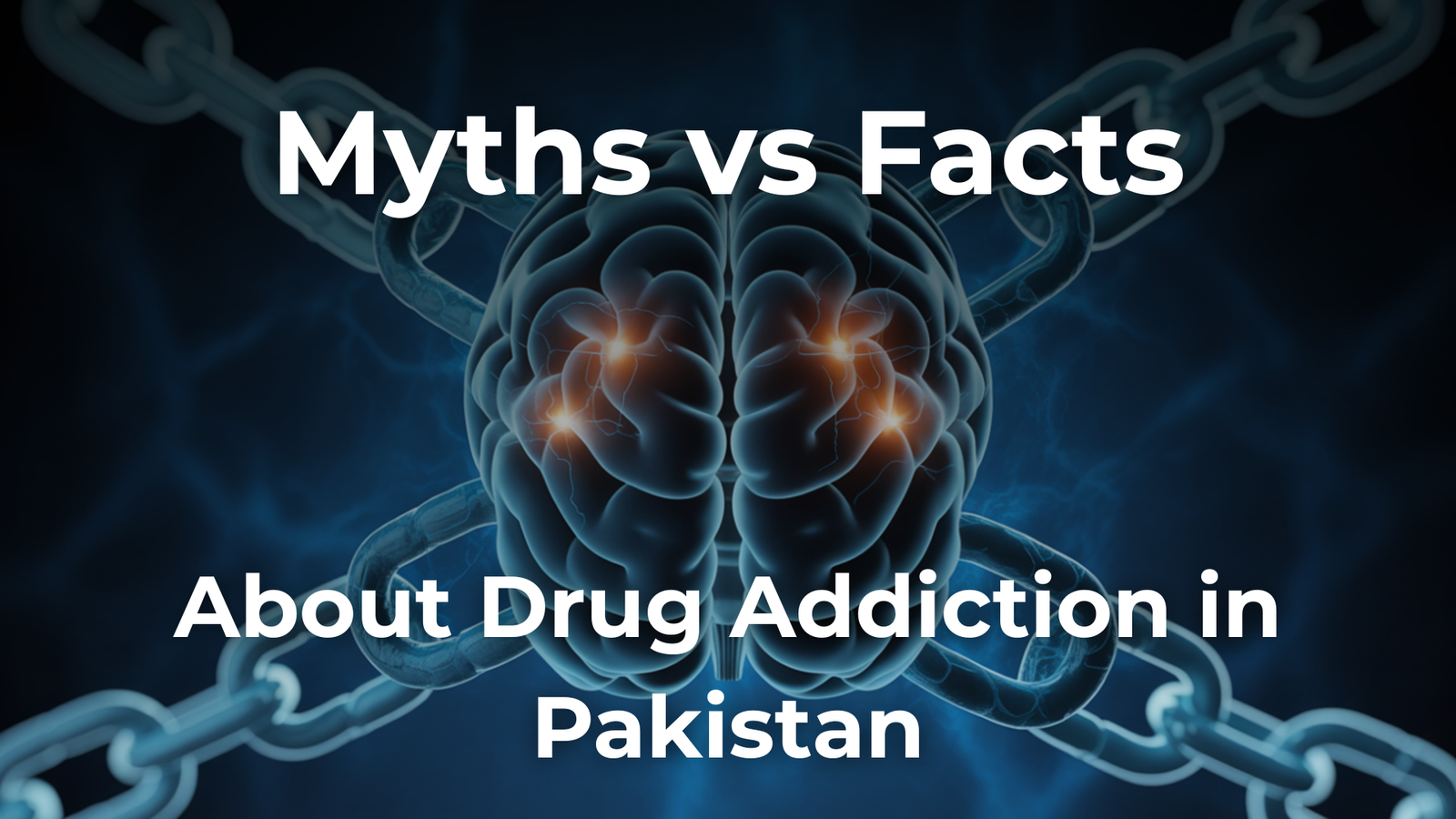
Addiction is a chronic brain disorder, not a character flaw.
Drugs change the brain’s reward system, impulse control, and structure. This means addicted individuals require medical support and treatment not judgment.
Myth 2: Only poor or uneducated people become addicted.
Fact:
Addiction affects people from every class, profession, and education level in Pakistan.
Students, professionals, businessmen, and even highly educated individuals can develop addictions because it relates to stress, environment, and brain chemistry not social status.
Myth 3: Drug addiction is mostly due to bad company.
Fact:
While peer influence can impact youth, addiction is usually caused by a combination of factors:
-
Stress
-
Anxiety or depression
-
Genetic vulnerability
-
Trauma
-
Availability of drugs
It is a complex issue not just a social choice.
Myth 4: If someone wants to quit, they can stop anytime.
Fact:
Addiction rewires the brain, making quitting extremely difficult without proper help.
Professional treatment, therapy, and support systems greatly increase success rates.
Myth 5: Treatment doesn’t work; people always relapse.
Fact:
Relapse is part of the recovery process, not a failure.
With proper treatment, relapse prevention plans, and family support, long-term recovery is absolutely possible.
Myth 6: Rehabilitation centers in Pakistan are all the same.
Fact:
Facilities vary widely.
Some offer professional, medically supervised programs, while others lack proper care. Researching licensed, ethical, and evidence-based rehab centers is crucial.
Myth 7: Talking about addiction encourages drug use.
Fact:
Open conversations help with early intervention, awareness, and prevention.
Silence only strengthens stigma and delays treatment.
Myth 8: Addiction only comes from hard drugs like heroin or crystal meth.
Fact:
In Pakistan, addiction often begins with:
-
Painkillers
-
Sleeping pills
-
Gutka, naswar
-
Cigarettes
-
Alcohol
-
Ice (meth)
All substances that alter the brain can lead to addiction.
Conclusion
Understanding the realities of addiction is vital for building a healthier, more supportive society. Myths create stigma; facts save lives. By spreading accurate information, we can help individuals seek treatment with dignity and hope.
Ready to take the first step toward recovery?
Contact our specialists today for confidential help and personalized treatment.
 Call Now: 0331-5500090
 Visit: www.hrci.pk