
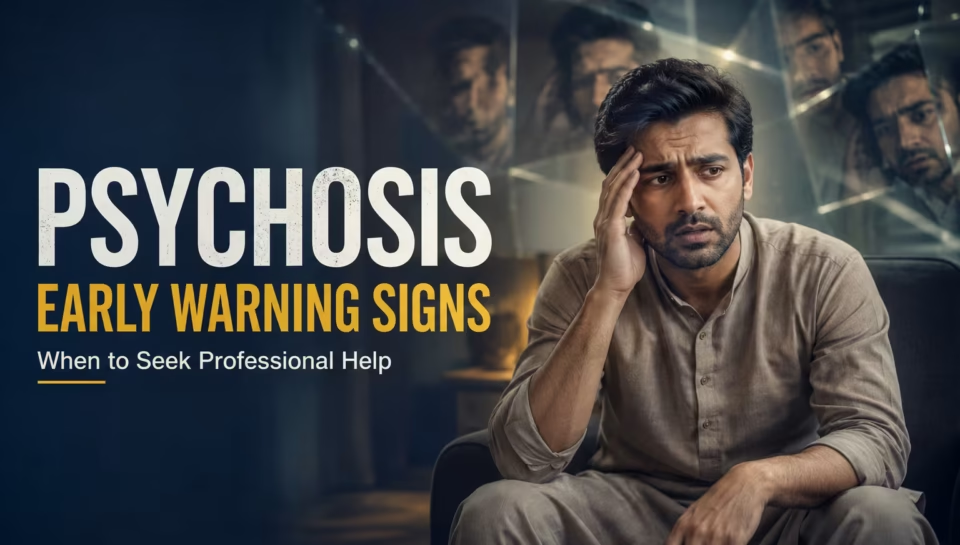
Psychosis: Early Warning Signs That Require Immediate Professional Help
Psychosis can change the way a person thinks, feels, and understands reality. Learning to recognize early warning signs such as hallucinations, delusions, severe confusion, and sudden changes in behavior can help families seek professional support before the situation becomes a serious crisis.
Psychosis is not simply “acting strangely” or having an unusual opinion. It is a serious mental health condition in which a person may lose contact with reality. Early professional assessment and treatment can often improve recovery and reduce the risk of further harm.
What Is Psychosis?
Psychosis is a group of symptoms that affect a person’s ability to distinguish reality from thoughts, beliefs, or perceptions.
A person experiencing psychosis may hear or see things that others do not, develop strong false beliefs, or have difficulty organizing their thoughts.
Psychosis can occur as part of several mental health and medical conditions, including:
- Schizophrenia spectrum disorders
- Bipolar disorder
- Severe depression
- Substance-induced psychosis
- Certain neurological conditions
- Some medical illnesses
- Severe sleep deprivation
Psychosis can affect people of different ages and backgrounds. It may develop gradually, or symptoms may appear suddenly.
Why Early Warning Signs Matter
Early warning signs can sometimes appear days, weeks, or even longer before a severe psychotic episode.
Recognizing these changes does not mean diagnosing someone at home. Instead, it helps families understand when a professional mental health assessment may be needed.
Early help can be important because untreated psychosis may affect:
- Education and work
- Family relationships
- Physical health
- Personal safety
- Sleep and daily routines
- The ability to care for oneself
The earlier a person receives appropriate professional support, the sooner treatment can begin.
Early Warning Sign 1: Sudden Social Withdrawal
One of the early signs of developing mental health difficulties may be a significant change in social behavior.
A person who was previously active with family, friends, school, or work may suddenly begin avoiding others.
They may:
- Stop answering calls
- Avoid family gatherings
- Spend most of the day alone
- Lose interest in hobbies
- Become unusually distant
Social withdrawal alone does not mean a person is experiencing psychosis. Depression, anxiety, stress, and other conditions can also cause isolation.
However, sudden withdrawal combined with unusual beliefs, confusion, or changes in behavior should be taken seriously.
Early Warning Sign 2: Suspiciousness and Paranoia
A person may begin to believe that others are watching, following, monitoring, or trying to harm them.
For example, someone may suddenly believe:
- Neighbors are spying on them
- Family members are secretly working against them
- Their phone is being monitored
- Strangers are sending them hidden messages
- Someone wants to harm them
These beliefs may feel completely real to the person experiencing them.
Arguing aggressively or mocking the person’s fears may increase distress. A calm approach and professional mental health assessment are generally more helpful.
Early Warning Sign 3: Hearing or Seeing Things Others Do Not
Hallucinations involve experiencing sensations that appear real but are not caused by something actually present in the environment.
Auditory hallucinations are common in psychosis. A person may hear voices when no one is speaking.
They may:
- Hear voices talking about them
- Hear commands
- Hear threatening sounds
- See people or objects that others cannot see
Hallucinations can also involve touch, smell, or other senses.
If someone is hearing voices telling them to hurt themselves or another person, immediate professional help is required.
Early Warning Sign 4: Strong False Beliefs
Delusions are fixed beliefs that remain strong even when there is clear evidence that the belief may not be true.
A person experiencing delusions may believe they have special powers, are being targeted, or are receiving secret messages.
Examples may include beliefs that:
- Television programmes are sending personal messages
- The person has a special supernatural mission
- Other people can control their thoughts
- A government or organization is secretly targeting them
- Ordinary events have a hidden personal meaning
These beliefs can be extremely frightening for the individual.
Family members should avoid humiliating or aggressively challenging the person. Instead, they should focus on safety and encourage professional assessment.
Early Warning Sign 5: Disorganized Speech and Thinking
Psychosis can affect how a person organizes thoughts and communicates.
Their speech may become difficult to follow. They may suddenly change topics, use unrelated words, or provide answers that do not match the questions being asked.
Possible signs include:
- Jumping rapidly between unrelated topics
- Speaking in confusing sentences
- Losing track of conversations
- Repeating unusual phrases
- Finding it difficult to explain basic thoughts
A sudden and significant change in communication can be a reason to seek professional help.
Early Warning Sign 6: Sudden Changes in Behavior
A person may behave in ways that are completely different from their usual personality.
They may become unusually agitated, fearful, restless, or emotionally unpredictable.
Sudden behavior changes may include:
- Wandering without a clear purpose
- Becoming extremely suspicious
- Speaking to people who are not present
- Performing unusual repetitive actions
- Neglecting normal responsibilities
- Becoming unusually aggressive or frightened
Behavior changes should be assessed in context. Medical conditions, substance use, sleep deprivation, and other mental health conditions can also cause similar symptoms.
Early Warning Sign 7: Severe Sleep Disturbance
Sleep changes can occur before or during psychosis.
A person may sleep very little for several nights or completely change their normal sleep schedule.
Severe sleep loss can affect:
- Concentration
- Mood
- Judgment
- Memory
- Emotional control
In some cases, prolonged lack of sleep may worsen existing mental health symptoms.
A sudden combination of very little sleep, extreme energy, unusual beliefs, and risky behavior may require urgent professional evaluation.
Early Warning Sign 8: Neglecting Personal Hygiene
A person experiencing psychosis may stop taking care of everyday needs.
They may stop:
- Bathing regularly
- Changing clothes
- Brushing their teeth
- Eating properly
- Taking prescribed medication
This may happen because the person is confused, overwhelmed, depressed, or focused on unusual thoughts and beliefs.
A significant decline in self-care should not be ignored, especially when combined with other warning signs.
Early Warning Sign 9: Difficulty Telling What Is Real
One of the most important warning signs is a clear difficulty separating reality from unusual experiences.
The person may be unable to recognize that their perceptions or beliefs could be symptoms of a health problem.
They may strongly believe that their experiences are completely real.
This can make it difficult for family members to convince them to seek help.
The goal should not be to win an argument. The priority should be safety, calm communication, and professional assessment.
Psychosis and Substance Use
Some substances can cause psychosis or worsen existing mental health symptoms.
Substance-induced psychosis may occur after using or withdrawing from certain substances.
Potential triggers may include:
- Methamphetamine
- Cocaine
- Cannabis
- Hallucinogenic drugs
- Certain prescription medicines
- Alcohol withdrawal
A person with sudden hallucinations, paranoia, or severe confusion after using substances requires professional medical evaluation.
It is important to tell healthcare professionals about recent substance use so they can assess the situation properly.
Psychosis and Mental Health Conditions
Psychosis can occur as part of different mental health conditions.
It may be associated with:
- Schizophrenia
- Bipolar disorder
- Severe depression
- Schizoaffective disorder
- Substance use disorders
However, experiencing psychosis does not automatically mean a person has schizophrenia.
Only a qualified mental health professional can assess symptoms, medical history, substance use, and other factors to determine the possible cause.
When Does Psychosis Require Immediate Professional Help?
Immediate professional help is important when a person:
- Threatens to harm themselves
- Threatens to harm someone else
- Hears voices giving dangerous commands
- Becomes extremely confused
- Cannot care for basic needs
- Is wandering into dangerous situations
- Becomes severely agitated or aggressive
- Has severe hallucinations or paranoia
- Has recently used drugs and developed psychotic symptoms
If there is an immediate danger to life or safety, contact local emergency medical services or take the person to the nearest emergency department.
How Families Should Respond to Someone Experiencing Psychosis
Families often feel frightened or confused when a loved one begins experiencing psychotic symptoms.
A calm and supportive response can help reduce unnecessary stress.
Stay Calm
Speak in a calm voice and use short, simple sentences.
Avoid shouting, threatening, or surrounding the person with multiple people.
Do Not Argue About the Belief
If someone believes they are being watched, aggressively telling them they are “crazy” may make them feel more threatened.
Instead, acknowledge their fear without confirming the belief.
For example, you can say:
“I understand that this feels very real and frightening for you. I want to help you feel safe.”
Reduce Stimulation
Bright lights, loud noises, crowds, and too many conversations may increase distress.
If possible, move the person to a quiet and safe environment.
Encourage Professional Help
A qualified psychiatrist or mental health professional can assess the symptoms and recommend appropriate treatment.
The person may require psychiatric evaluation, medication, therapy, medical tests, or structured care depending on the cause.
How Psychosis Is Treated
Treatment depends on the underlying cause and the severity of symptoms.
A professional treatment plan may include:
- Psychiatric assessment
- Medication
- Psychological therapy
- Family education
- Substance use treatment
- Medical evaluation
- Hospital care when necessary
- Ongoing follow-up
Antipsychotic medicines may be prescribed by a qualified medical professional to help manage symptoms.
Medication should only be taken under professional medical supervision.
When a Psychiatric Treatment Centre May Be Needed
People experiencing severe hallucinations, delusions, confusion, or unsafe behavior may require specialized psychiatric support.
A qualified Psychiatric treatment centre can provide assessment and structured care for people experiencing serious mental health symptoms.
Treatment may be especially important when psychosis is combined with:
- Drug addiction
- Alcohol addiction
- Severe depression
- Bipolar symptoms
- Risk of self-harm
- Aggressive behavior
Families should seek professional advice rather than attempting to manage severe psychosis alone.
Psychosis and Addiction: When Dual Treatment Is Needed
Some people experience psychosis alongside drug or alcohol addiction.
In these cases, treating only one condition may not be enough.
For example, continuing drug use may worsen hallucinations and paranoia. At the same time, untreated mental health symptoms may make it more difficult for the person to stop using substances.
An integrated treatment plan may include both mental health care and addiction treatment.
Families looking for a Best rehab centre in Islamabad, Rehabilitation centre in Islamabad, Addiction treatment centre, Drug rehab centre, should consider whether the facility can address both substance use and mental health needs.
A professional Rehab centre in Islamabad may provide structured addiction recovery support, while psychiatric care may be needed for severe psychotic symptoms.
Can Psychosis Be Treated?
Yes, psychosis can be treated, and many people improve with appropriate professional support.
Recovery depends on the underlying cause, how quickly treatment begins, the person’s response to treatment, and ongoing support.
Early treatment can help reduce symptoms and support a return to education, employment, relationships, and daily life.
The most important step is not to ignore early warning signs.
Key Takeaways
Psychosis can affect a person’s ability to understand reality and may involve hallucinations, delusions, paranoia, confusion, and major behavioral changes.
Important warning signs include:
- Hearing or seeing things others do not
- Strong beliefs that are not based on reality
- Sudden suspiciousness or paranoia
- Confused or disorganized speech
- Severe social withdrawal
- Major changes in sleep and behavior
- Neglect of personal hygiene
- Risk of harm to self or others
Psychosis requires professional assessment, especially when symptoms are severe, sudden, or connected to substance use.
If you or someone you love is experiencing hallucinations, delusions, severe confusion, or dangerous behavior, seek immediate professional help. A qualified psychiatrist, Psychiatric treatment centre, Addiction treatment centre, or Best rehab centre in Islamabad can help assess the situation and guide the next steps.