Substance use disorder affects individuals and families across Pakistan, cutting across age, income, and geography. If you are searching for recovery options whether you’re considering the Best rehab centre in Islamabad, or a Rehabilitation centre near me you may encounter two major treatment philosophies: harm reduction and abstinence. Both approaches aim to improve health, dignity, and …


Substance use disorder affects individuals and families across Pakistan, cutting across age, income, and geography. If you are searching for recovery options whether you’re considering the Best rehab centre in Islamabad, or a Rehabilitation centre near me you may encounter two major treatment philosophies: harm reduction and abstinence.
Both approaches aim to improve health, dignity, and safety. They differ in goals, methods, and timelines. This guide explains harm reduction vs abstinence in clear terms, compares benefits and limitations, and offers practical advice on selecting a Rehab centre in Islamabad or nearby. The goal is to help you make an informed, patient-centered decision one that fits your needs, values, and stage of recovery.
Understanding Substance Use Disorder and Treatment Pathways
Substance use disorder (SUD) is a medical condition characterized by continued use despite harm, changes in brain function, and difficulty controlling use. Recovery is not a single event; it is a treatment pathway that may include detox, therapy, medication, psychosocial support, and aftercare.
In Pakistan, treatment pathways are offered by:
-
A Drug rehab centre (for illicit or prescription drug dependence)
-
An Alcohol treatment centre
-
An Addiction treatment centre with integrated services
-
A Psychiatric treatment centre for co-occurring mental health needs
Two overarching philosophies guide care delivery: harm reduction and abstinence.
What Is Harm Reduction?
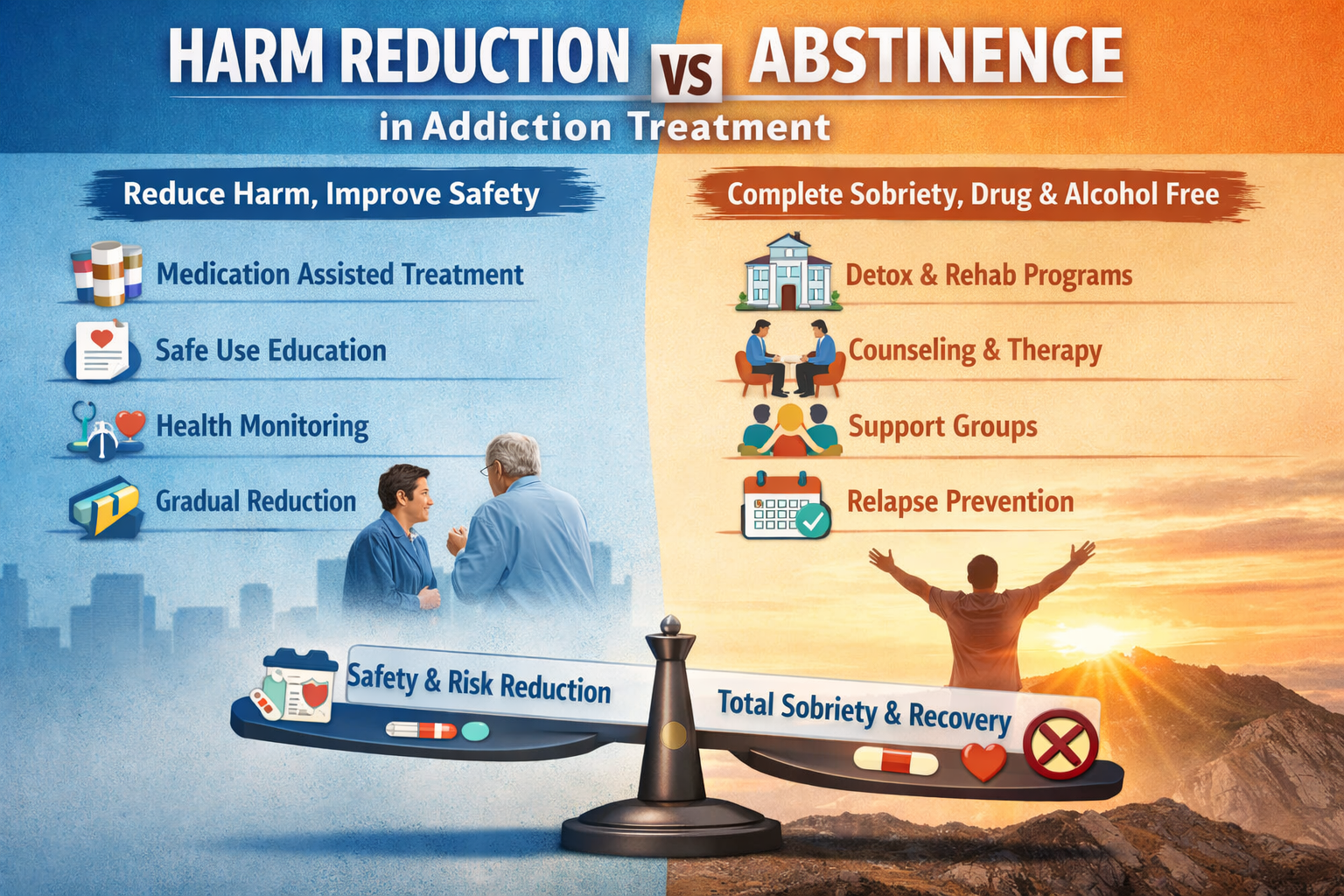
Harm reduction focuses on reducing the negative consequences of substance use without requiring immediate or complete cessation. The core principle is safety first meeting people where they are and lowering risks while supporting healthier choices.
Common Harm Reduction Strategies
-
Medication-assisted treatment (MAT) where appropriate
-
Managed detoxification with medical oversight
-
Safer-use education and relapse-prevention planning
-
Regular health screening and counseling
-
Gradual reduction plans with close monitoring
Key idea: Progress is measured by improved health, stability, and engagement not only by total abstinence.
Benefits of Harm Reduction
Harm reduction offers several evidence-backed advantages, particularly for individuals not ready for immediate abstinence or those at high medical risk.
-
Lower overdose and complication risk: Medical supervision and safer-use guidance reduce emergencies.
-
Higher engagement: People are more likely to seek help when care is non-judgmental.
-
Flexibility: Plans adapt to individual readiness and circumstances.
-
Bridge to abstinence: Many patients transition to abstinence after stabilizing.
Callout: Harm reduction is not “giving up.” It is a stepwise approach that prioritizes safety and keeps the door to recovery open.
Limitations of Harm Reduction
Harm reduction is not a fit for everyone.
-
Ongoing exposure: Continued use can still affect health, family life, and employment.
-
Clear boundaries needed: Without structure, some individuals may stall.
-
Availability varies: Not all facilities in Pakistan offer comprehensive harm reduction services.
For some, these limitations make abstinence-focused care a better match.
What Is Abstinence-Based Treatment?
Abstinence aims for complete cessation of alcohol and drugs. Programs are structured and often include detox, residential or intensive outpatient care, therapy, peer support, and strong aftercare planning.
Typical Abstinence Program Components
-
Medically supervised detox (when needed)
-
Individual and group therapy
-
Family counseling
-
Relapse-prevention skills
-
Long-term aftercare and community support
Abstinence remains the most common model at a Rehab centre Islamabad and across many Rehabilitation centre in Islamabad facilities.
Benefits of Abstinence
-
Clear goal: No substance use, which simplifies decision-making.
-
Reduced long-term risk: Eliminates exposure-related harms.
-
Structured environment: Helpful for severe dependence.
-
Community support: Peer accountability strengthens recovery.
Callout: For many, abstinence provides the clean break needed to rebuild health and relationships.
Limitations of Abstinence
-
High early relapse risk: Especially without robust aftercare.
-
Readiness matters: Forcing abstinence before a person is ready can backfire.
-
Stigma and fear: Some delay care due to concerns about strict rules.
Abstinence works best when matched to readiness, severity, and strong follow-up support.
Harm Reduction vs Abstinence: A Side-by-Side View
| Aspect | Harm Reduction | Abstinence |
|---|---|---|
| Primary goal | Reduce harm and risk | Complete cessation |
| Ideal for | Early engagement, high medical risk | Severe dependence, high motivation |
| Structure | Flexible, individualized | Structured, program-driven |
| Measures of success | Safety, stability, health gains | Sustained sobriety |
| Transition | Often a bridge to abstinence | May include MAT and therapy |
Both models can be evidence-informed when delivered by trained clinicians within an Addiction treatment centre.
Patient-Centered Considerations: Which Approach Fits You?
Choosing a pathway is personal. Consider these factors with a clinician:
-
Severity and duration of use
-
Previous treatment attempts
-
Co-occurring mental health conditions (depression, anxiety, trauma)
-
Medical risks (withdrawal severity, chronic illness)
-
Family and social support
-
Cultural and spiritual preferences
A reputable Psychiatric treatment centre or integrated Drug rehab centre will tailor care rather than impose a one-size-fits-all model.
Safety First: Medical Oversight and Ethics
Regardless of approach, safety is non-negotiable.
-
Medically supervised detox reduces withdrawal risks.
-
Qualified staff (psychiatrists, psychologists, nurses) ensure ethical care.
-
Confidentiality and informed consent protect dignity.
-
Aftercare planning lowers relapse risk.
When evaluating a Rehab centre in Islamabad or Rehabilitation centre in Rawalpindi, ask about medical protocols and emergency readiness.
What to Ask When Choosing a Rehab Centre in Islamabad or Rawalpindi
Use these questions to compare options whether you’re considering the Best rehab centre in Islamabad or searching for a Rehabilitation centre near me:
-
Which approaches do you offer harm reduction, abstinence, or both?
-
Is detox medically supervised?
-
Do you treat co-occurring mental health conditions on-site?
-
What therapies are used (CBT, family therapy, relapse prevention)?
-
How is aftercare structured and supported?
-
What qualifications do clinicians hold?
-
How is family involvement handled?
Transparent answers signal quality and patient-centered care.
What to Expect From Rehab Centres in Islamabad and Rawalpindi
While programs vary, many Rehab centre Islamabad facilities provide:
-
Assessment and individualized care plans
-
Inpatient or outpatient options
-
Therapy schedules with measurable goals
-
Medication management when indicated
-
Aftercare coordination (follow-ups, referrals)
Facilities in Rawalpindi often collaborate regionally, making continuity easier if you live nearby.
Finding a Suitable Centre Near You (Non-Promotional)
To find a Rehabilitation centre:
-
Consult a healthcare professional for referrals.
-
Verify credentials with provincial health authorities.
-
Ask about outcomes and aftercare, not just amenities.
-
Visit or call to assess transparency and fit.
-
Involve family in the decision when appropriate.
Avoid centers that guarantee outcomes or discourage second opinions.
Evidence and Effectiveness: What Research Suggests
International evidence indicates:
-
Medication-assisted treatment and counseling reduce overdose and improve retention.
-
Structured abstinence programs can achieve strong outcomes with comprehensive aftercare.
-
Integrated care (addressing mental health, family systems, and social factors) improves long-term recovery.
The strongest results come from matching the approach to the individual, revisiting goals over time, and maintaining follow-up care.Conclusion: One Goal, Multiple Paths
Harm reduction and abstinence are not rivals; they are tools. The right choice depends on readiness, safety, and support. Whether you choose a Drug rehab centre, an Alcohol treatment centre, or a comprehensive Addiction treatment centre, prioritize medical oversight, individualized planning, and aftercare.
Recovery is possible and choosing a pathway that fits you today can open the door to healthier tomorrows.
Source Link
Incorporating Harm Reduction Into Alcohol Use Disorder Treatment and Recovery” – National Institute on Alcohol Abuse and Alcoholism (NIAAA) discusses how harm reduction strategies compare with abstinence-focused outcomes and recovery concepts in substance use treatment. Read the NIAAA article on harm reduction vs abstinence in recovery
Book a Consultation
It’s easy and free!