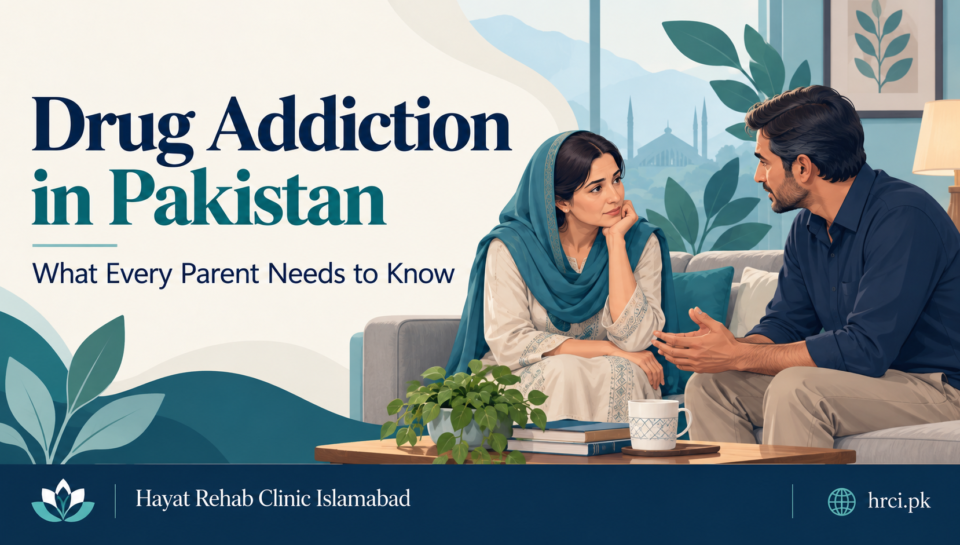
Drug Addiction in Pakistan: What Every Parent Needs to Know
A change in your child’s behaviour can leave you wondering whether something is wrong. They may withdraw from family conversations, lose interest in studies, or seem unusually tired. These changes do not automatically mean drug use, but they deserve a calm conversation.
For parents, understanding drug addiction statistics in Pakistan is a starting point. The numbers reveal a serious public health concern. What matters most is understanding those figures, recognising when someone needs help, and responding with care.
Concern should lead to conversation and professional support, not shame or punishment.
Behind the Numbers: Understanding Pakistan’s Drug Use Statistics
A major source of national estimates is the United Nations Office on Drugs and Crime’s Drug Use in Pakistan 2013 report, based on research conducted in 2012.
These are historical estimates for people aged 15–64. They are not current totals or statistics specifically about schoolchildren.
| Measure | Estimate reported |
|---|---|
| People who used controlled substances, including nonmedical prescription drug use, in the preceding year | 6.7 million |
| Share of the population aged 15–64 reporting such use | Approximately 6% |
| People considered dependent and needing structured treatment | 4.25 million |
| People who used cannabis | 4 million |
| People who used heroin | 860,000 |
| People who misused prescription opioids | 1.6 million |
Substance categories overlap, so these figures should not be added together. Drug use and drug dependence are also different measures: the report does not say that all 6.7 million people had an addiction.
The scale warrants attention, but presenting these estimates as “Pakistan’s drug addiction figures for 2026” would be misleading.
What These Figures Mean for Your Family
National statistics cannot tell you whether your child uses drugs. They also cannot establish the percentage of students using substances at a particular school or university.
When you encounter an alarming claim online, ask:
- Who collected the information?
- When was the research conducted?
- Did it cover the whole country or one institution?
- Does it describe occasional use, harmful use, or diagnosed dependence?
A dramatic headline without these details can create fear without helping families make informed decisions.
For your own family, the more useful questions are personal: Has something changed? Is your child struggling? Do they feel comfortable asking you for help?
Early Warning Signs Parents Should Recognise
Possible warning signs include:
- A noticeable decline in school performance or attendance.
- Withdrawal from family, friends, or activities they previously enjoyed.
- Persistent changes in mood, motivation, or behaviour.
- Changes in sleeping or eating habits.
- Problems with concentration or coordination.
- Finding substances or drug-related equipment.
These signs are not proof of addiction. Some can reflect developmental changes or other health concerns. Look for patterns and seek an assessment instead of making a diagnosis at home.
You do not need to prove drug use before asking a qualified professional for guidance. An assessment can help clarify what is happening and what support is appropriate.
Starting the Conversation Without Blame
Choose a quiet time when you are both calm. Begin with something you have noticed rather than an accusation.
You might say:
“I’ve noticed you haven’t been sleeping well and seem upset lately. I’m concerned about you. Is there something you want to talk about?”
Then give them space to answer.
Regular, supportive conversations can help children feel comfortable discussing alcohol and other drugs. Listening to their concerns and communicating clear expectations are useful parts of prevention. One difficult conversation does not have to resolve everything.
Keep the focus on safety and understanding. Public embarrassment, labels, and arguments about the family’s reputation can distract from the immediate question: what does this person need?
Concerned About Drug Use? Steps Parents Can Take
Arrange an appointment with a qualified doctor or addiction specialist. Explain the changes you have noticed and ask about an age-appropriate assessment.
Professional screening can explore substance use alongside other health concerns. For adolescents, choose a clinician experienced in working with young people.
Before the appointment, write down:
- When the changes began.
- Any substances or medicines you know about.
- Changes in sleep, education, relationships, or daily functioning.
- Any immediate concerns about safety.
You do not need to have every answer. Clear observations are more useful than assumptions.
For someone under 18, ask the provider about adolescent services, family involvement, and confidentiality before arranging treatment.
Understanding Treatment and the Road to Recovery
Treatment should respond to the individual’s needs. Depending on the assessment, it may include medical care, behavioural therapy, medication where appropriate, and ongoing recovery support.
Detoxification may be part of care, but detox alone is generally insufficient for sustained recovery. Treatment also needs to address the behaviours, health conditions, and circumstances connected with substance use.
When speaking with a treatment provider, ask:
- Who will carry out the assessment?
- What treatment options are suitable, and why?
- How will progress be reviewed?
- How can the family participate?
- What follow-up support is available?
These questions help families understand the proposed care and make informed decisions.
Recognising an Emergency: When to Act Immediately
If someone cannot be awakened or has slow, difficult, or stopped breathing after suspected drug use, seek emergency medical help immediately. These can be signs of an opioid overdose.
Do not wait for a routine rehabilitation appointment or assume the person can safely sleep it off. Naloxone can reverse opioid overdose when available, but emergency medical attention is still necessary.
Take the First Step With Hayat Rehab Clinic Islamabad
You do not have to navigate concerns about substance use alone.
At Hayat Rehab Clinic Islamabad, located in Bani Gala, our services include addiction assessment, personalised treatment planning, mental health care, and aftercare support. Families can contact our team to discuss their concerns and ask about suitable next steps.
If you are seeking help for a minor, please confirm age eligibility and appropriate services with the clinic.
The most useful response to worrying statistics is a timely, compassionate action. That may begin with listening to your child, speaking to a clinician, or asking for an assessment.
Contact Hayat Rehab Clinic Islamabad
Phone: +92 340 1531 371
Email: info@hrci.pk
Website: www.hrci.pk
Location: Bani Gala, Islamabad.