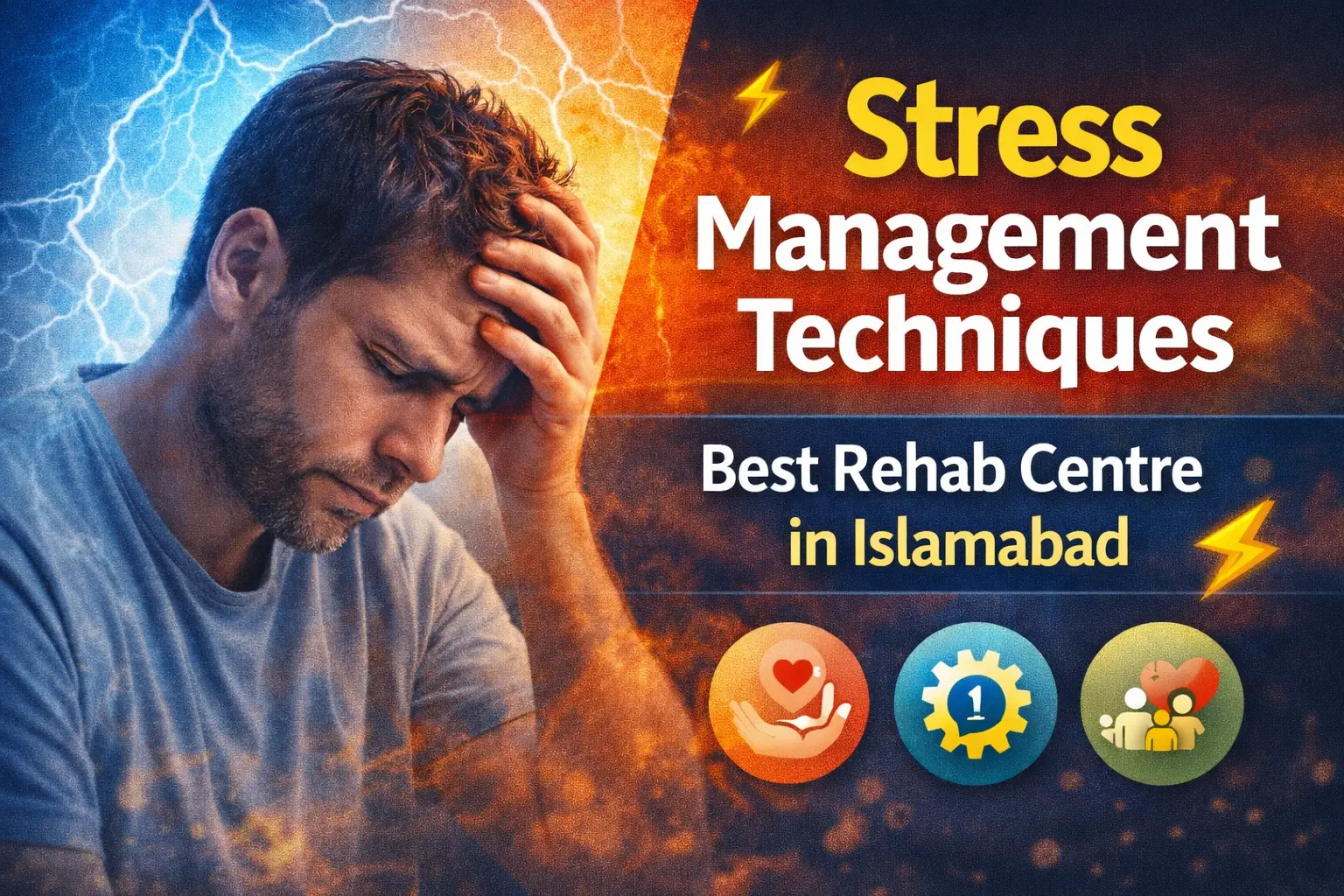
Stress affects everyone. However, for individuals struggling with substance use, unmanaged stress often becomes a major trigger for relapse. Whether you are exploring options at the Best rehab centre in Islamabad or researching a trusted Rehabilitation centre in Rawalpindi, understanding stress management can significantly improve recovery outcomes. In this guide, we explain practical stress management …


Stress affects everyone. However, for individuals struggling with substance use, unmanaged stress often becomes a major trigger for relapse. Whether you are exploring options at the Best rehab centre in Islamabad or researching a trusted Rehabilitation centre in Rawalpindi, understanding stress management can significantly improve recovery outcomes.
In this guide, we explain practical stress management techniques and how a professional Rehab centre in Islamabad integrates these tools into structured addiction treatment programs.
Why Stress Management Matters in Addiction Recovery
Stress directly impacts the brain’s reward and decision-making systems. When pressure builds, many individuals turn to alcohol or drugs for temporary relief. Over time, this pattern strengthens dependency.
A reputable Addiction treatment centre understands this connection. Treatment programs do not only focus on detoxification; they teach clients how to respond to stress in healthier ways.
Effective stress management:
-
Reduces cravings and relapse risk
-
Improves emotional regulation
-
Enhances sleep quality
-
Strengthens coping skills
-
Supports long-term sobriety
Whether you seek help from a Drug rehab centre, an Alcohol treatment centre, or a Psychiatric treatment centre, stress management remains a core component of recovery.
Proven Stress Management Techniques Used in Rehab Centres
Professional treatment centers use evidence-based techniques to help individuals regain control over their mental and emotional health.
1. Deep Breathing and Relaxation Techniques
Controlled breathing calms the nervous system and lowers anxiety levels. Many rehabilitation centres teach:
-
Box breathing (4-4-4-4 technique)
-
Progressive muscle relaxation
-
Guided imagery exercises
These methods help individuals manage cravings and emotional triggers in real time.
2. Cognitive Behavioral Therapy (CBT)
CBT remains one of the most effective therapies offered at any quality Rehabilitation centre in Islamabad. It helps individuals:
-
Identify stress triggers
-
Challenge negative thought patterns
-
Replace harmful behaviors with healthy coping strategies
CBT also benefits those receiving care at a Psychiatric treatment centre, especially when anxiety or depression co-occurs with addiction.
3. Physical Activity and Structured Routine
Exercise significantly reduces stress hormones while boosting mood-enhancing chemicals.
Most inpatient programs at a Rehab centre Islamabad include:
-
Morning walks
-
Light fitness sessions
-
Yoga or stretching
-
Structured daily schedules
Routine restores stability, which many individuals lose during active addiction.
4. Mindfulness and Meditation
Mindfulness helps individuals stay present instead of reacting impulsively to stress.
Programs at the Best rehab centre in Islamabad often include:
-
Guided meditation
-
Journaling
-
Gratitude practices
-
Emotional awareness exercises
These practices build resilience and reduce relapse risk.
5. Support Groups and Counseling
Isolation increases stress. Professional rehab programs provide:
-
Group therapy
-
Family counseling
-
Peer support sessions
A supportive community creates accountability and emotional safety, which are essential for long-term recovery.
What Services Does a Rehabilitation Centre in Islamabad Offer?
When searching for a trusted Rehabilitation centre in Islamabad, it is important to understand what comprehensive care looks like.
1. Medical Detox
Medical detox safely manages withdrawal symptoms under professional supervision. This service is critical at any reputable Drug rehab centre or Alcohol treatment centre.
Doctors monitor:
-
Vital signs
-
Withdrawal symptoms
-
Medication management
Detox prepares the body for deeper therapeutic work.
2. Inpatient Treatment Programs
Inpatient programs provide structured, 24/7 care. They suit individuals with moderate to severe addiction.
Services typically include:
-
Individual therapy
-
Group counseling
-
Stress management training
-
Psychiatric evaluation
-
Relapse prevention planning
Many people seeking the Best rehab centre in Islamabad prefer inpatient care for its intensive support.
3. Outpatient Treatment
Outpatient programs allow individuals to receive therapy while living at home. This option works well for those with mild addiction or strong family support.
A quality Rehab centre in Islamabad offers flexible outpatient services for working professionals and students.
4. Psychiatric Treatment and Dual Diagnosis Care
Addiction often coexists with mental health conditions like depression, anxiety, or trauma. A licensed Psychiatric treatment centre provides:
-
Mental health assessments
-
Medication management
-
Therapy for co-occurring disorders
Integrated treatment improves recovery success rates.
5. Aftercare and Relapse Prevention
Recovery does not end after discharge. Leading centres in Islamabad and Rawalpindi offer:
-
Follow-up counseling
-
Alumni programs
-
Ongoing support groups
-
Family education
Aftercare significantly lowers relapse risk.
How to Choose the Best Rehab Centre in Islamabad
Choosing the right treatment facility requires careful evaluation. Consider these factors:
✔ Qualified Medical and Clinical Staff
Ensure licensed doctors, psychiatrists, and therapists manage treatment.
✔ Comprehensive Programs
Look for detox, inpatient, outpatient, and aftercare services in one place.
✔ Individualized Treatment Plans
Every person’s addiction story differs. A strong Addiction treatment centre tailors care to individual needs.
✔ Mental Health Integration
Select a centre that also functions as a Psychiatric treatment centre if needed.
✔ Location and Accessibility
If you live near Rawalpindi, consider whether a Rehabilitation centre in Rawalpindi offers convenience for family involvement.
Stress Management Beyond Rehab: Building Long-Term Stability
Even after completing a program at a Rehab centre Islamabad, stress remains part of life. Sustainable recovery depends on continued self-care.
Daily practices include:
-
Maintaining a sleep schedule
-
Regular exercise
-
Healthy eating habits
-
Staying connected with support networks
-
Avoiding high-risk environments
Consistency strengthens emotional resilience.
Frequently Asked Questions (FAQ)
1. How long does treatment at a rehab centre in Islamabad last?
Treatment length varies. Detox may last 5–10 days, while inpatient programs typically run 30–90 days. Some individuals benefit from extended care.
2. Is stress management really necessary for addiction recovery?
Yes. Stress is one of the leading relapse triggers. Professional programs integrate stress management to reduce cravings and improve coping skills.
3. What is the difference between a drug rehab centre and an alcohol treatment centre?
Both provide addiction care. A Drug rehab centre focuses on substances like heroin, cocaine, or prescription drugs, while an Alcohol treatment centre specializes in alcohol dependency. Many centres treat both.
4. Can a psychiatric treatment centre help with addiction?
Yes. Many individuals require dual diagnosis care, where mental health and addiction receive simultaneous treatment.5. Are rehab centres in Rawalpindi as effective as those in Islamabad?
Effectiveness depends on program quality, staff expertise, and treatment approach—not just location. Research credentials and services before deciding.
Conclusion
Stress plays a powerful role in addiction, but effective stress management techniques can transform recovery outcomes. Whether you seek help at the Best rehab centre in Islamabad, a trusted Rehabilitation centre in Islamabad, or a reputable Rehabilitation centre in Rawalpindi, comprehensive care should address both addiction and emotional well-being.
Recovery requires structure, professional support, and consistent coping strategies. With the right guidance, lasting sobriety becomes achievable.
Book a Consultation
It’s easy and free!