
Introduction
Addiction affects more than behavior; it changes how the brain functions. Drugs and alcohol interfere with brain chemicals responsible for motivation, memory, focus, and emotional balance.
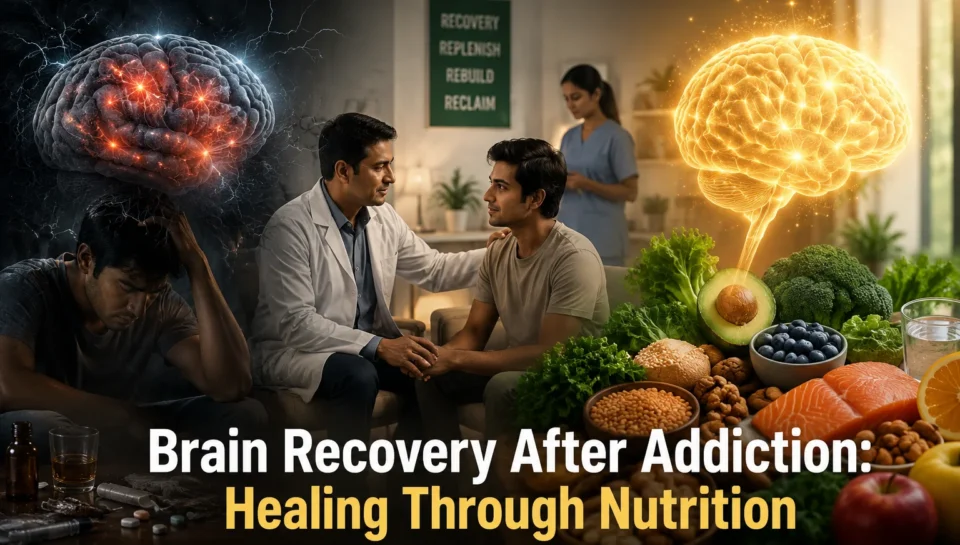
During recovery, individuals may experience low mood, anxiety, fatigue, and difficulty concentrating. The encouraging fact is that the brain can heal over time. With proper treatment, lifestyle changes, and nutrition, brain function can significantly improve.
A healthy diet supports recovery and helps the body and mind regain stability after addiction.
How Addiction Affects the Brain
Substance use disrupts the brain’s natural reward system, especially dopamine, which is responsible for pleasure and motivation. Over time, the brain produces less dopamine naturally, making everyday activities feel less rewarding.
Common Effects in Early Recovery:
- Brain fog and slow thinking
- Memory difficulties
- Mood swings and irritability
- Anxiety or depression
- Low energy and poor sleep
Nutrition plays an important role in restoring balance during this stage.
How Nutrition Supports Brain Healing
A healthy diet provides the brain with essential nutrients needed for recovery. Good nutrition helps:
- Repair damaged brain cells
- Improve brain communication
- Stabilize mood and energy levels
- Reduce cravings and relapse risk
Nutrition does not replace therapy or rehabilitation but significantly supports overall recovery.
Best Foods for Brain Recovery After Addiction
1. Protein-Rich Foods (Support Brain Chemicals)
Protein helps produce neurotransmitters that regulate mood and focus.
Best sources:
- Eggs
- Chicken
- Fish
- Lentils and beans
- Yogurt
Benefits:
Supports dopamine and serotonin production, which are often low during recovery.
2. Omega-3 Fatty Acids (Brain Repair)
Omega-3 fats help rebuild brain tissue and reduce inflammation.
Best sources:
- Salmon and sardines
- Walnuts
- Flaxseeds
- Chia seeds
Benefits:
Improves memory, emotional stability, and brain function.
3. Whole Grains (Steady Energy)
Whole grains provide long-lasting energy for the brain.
Best sources:
- Brown rice
- Oats
- Whole wheat bread
- Quinoa
Benefits:
Prevents energy crashes that may trigger irritability and cravings.
4. Fruits and Vegetables (Brain Protection)
Rich in antioxidants that protect brain cells from damage.
Best sources:
- Blueberries
- Oranges
- Spinach
- Carrots
- Broccoli
Benefits:
Reduces oxidative stress caused by long-term substance use.
5. Healthy Fats (Brain Communication)
Healthy fats support proper communication between brain cells.
Best sources:
- Avocados
- Olive oil
- Nuts and seeds
Benefits:
Improves memory, learning, and emotional regulation.
6. Water and Hydration (Mental Clarity)
Dehydration can worsen fatigue, confusion, and headaches.
Tip:
Drink water regularly throughout the day, even if you do not feel thirsty.
Foods to Limit During Recovery
Certain foods may slow brain healing or increase cravings:
- Sugary foods and soft drinks
- Highly processed foods
- Excess caffeine
- Energy drinks
Effects:
These can contribute to mood swings, sleep disturbances, and anxiety.
Simple Daily Nutrition Tips for Recovery
- Eat three balanced meals daily
- Include protein in breakfast
- Add fruits or vegetables to every meal
- Avoid skipping meals
- Stay consistently hydrated
Small, consistent habits can significantly improve recovery over time.
Nutrition, Mental Health, and Relapse Prevention
Poor nutrition can worsen anxiety, depression, and stress, which are common relapse triggers. A balanced diet supports emotional stability, better sleep, and stronger coping skills.
When combined with:
- Professional rehabilitation
- Therapy and counseling
- Family support
Nutrition becomes a powerful tool in long-term recovery.
When to Seek Professional Support
Professional help is recommended if:
- Mental health symptoms persist
- Cravings become difficult to control
- Daily functioning is affected
Addiction treatment programs can also include nutritional and psychological support for a more complete recovery.
Conclusion
Recovery is not only about stopping substance use; it is about healing both the mind and body. Proper nutrition plays an important role in restoring brain health and supporting long-term sobriety.
With the right care, guidance, and consistency, brain function can improve, and lasting recovery is possible.
🌐 Visit: https://hrci.pk/
📞 Call Now: 0331-5500090