Introduction Cocaine addiction is a serious and fast-developing substance use disorder that can affect physical health, mental stability, and social functioning. Because cocaine stimulates the central nervous system, dependency often forms quickly, making early recognition critical. Understanding the warning signs helps families and individuals seek timely support from a qualified addiction treatment centre, drug rehab …


Introduction
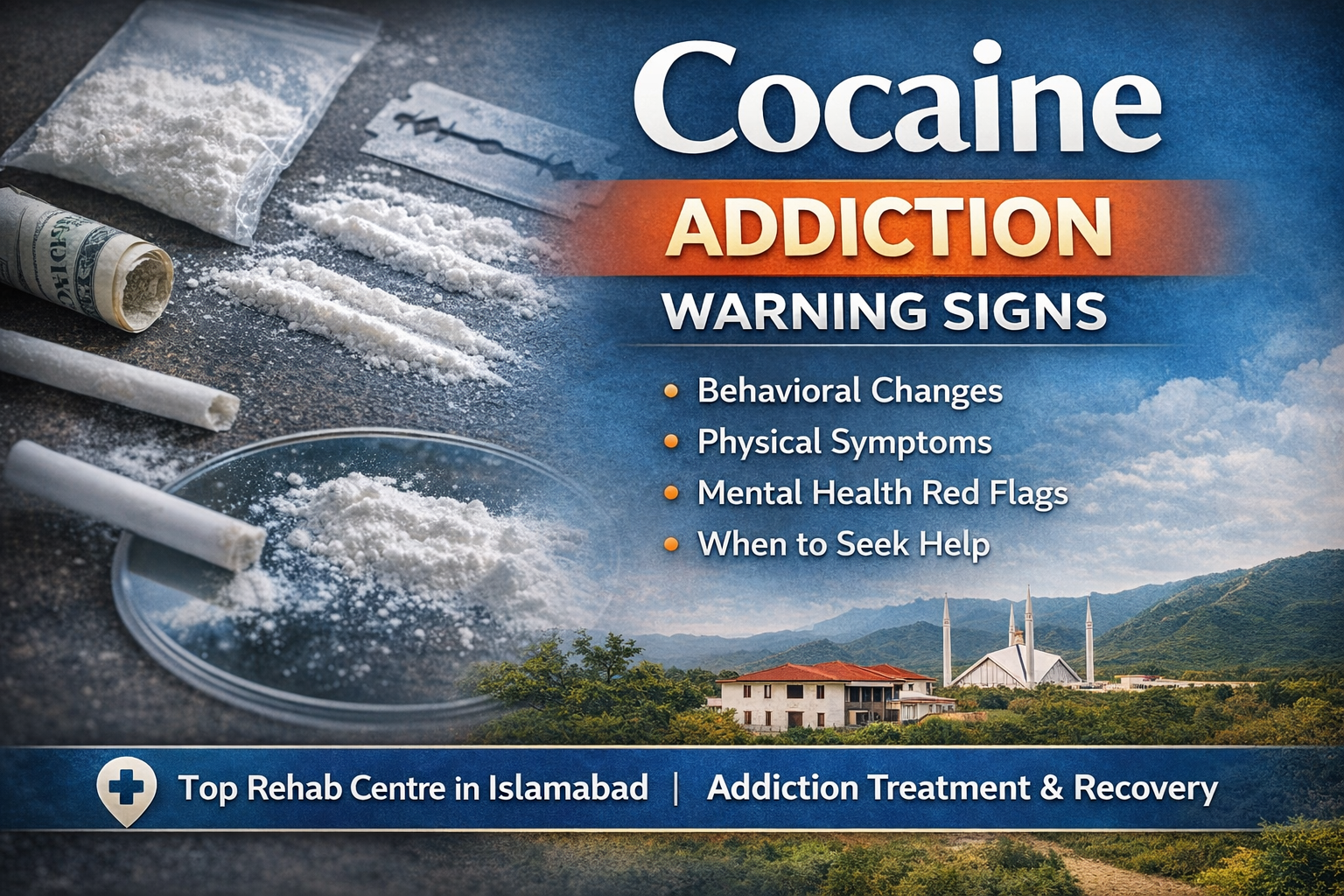
Cocaine addiction is a serious and fast-developing substance use disorder that can affect physical health, mental stability, and social functioning. Because cocaine stimulates the central nervous system, dependency often forms quickly, making early recognition critical. Understanding the warning signs helps families and individuals seek timely support from a qualified addiction treatment centre, drug rehab centre, or rehabilitation centre in Islamabad before the condition worsens.
Professional intervention from a rehab centre in Islamabad or psychiatric treatment centre can significantly improve recovery outcomes through medical supervision and behavioral therapy.
What Is Cocaine Addiction?
Cocaine is a powerful stimulant drug that increases dopamine levels in the brain, producing temporary euphoria, alertness, and energy. Repeated use disrupts natural reward pathways, leading to:
-
Psychological dependence
-
Cravings
-
Compulsive use despite consequences
Without treatment at a structured rehabilitation centre near me or rehabilitation centre in Rawalpindi, the cycle often escalates into addiction.
Early Warning Signs of Cocaine Addiction
Recognizing the initial indicators is essential for intervention.
Behavioral Signs
-
Sudden bursts of energy or hyperactivity
-
Risk-taking or impulsive decisions
-
Secretive or deceptive behavior
-
Social withdrawal or new peer groups
-
Financial difficulties without explanation
Physical Signs
-
Dilated pupils
-
Rapid heart rate
-
Reduced appetite
-
Nosebleeds or frequent sniffing
-
Insomnia or irregular sleep
Psychological Signs
-
Anxiety or paranoia
-
Irritability and mood swings
-
Restlessness
-
Depression after use
-
Increased aggression
Co-occurring mental health symptoms often require integrated care through a psychiatric treatment centre.
Advanced Warning Signs
As addiction progresses, symptoms intensify:
-
Strong cravings
-
Loss of interest in responsibilities
-
Neglect of hygiene or health
-
Relationship conflicts
-
Legal or occupational problems
At this stage, structured treatment at a rehab centre Islamabad or comprehensive addiction treatment centre becomes essential.
Health Risks of Untreated Cocaine Addiction
Ignoring warning signs can lead to severe complications:
-
Cardiovascular issues (heart attack, stroke)
-
Respiratory problems
-
Neurological damage
-
Increased risk of polysubstance abuse, including alcohol requiring support from an alcohol treatment centre
-
Mental health deterioration
These risks highlight the importance of seeking care from the best rehab centre in Islamabad or a licensed drug rehab centre.
When to Seek Professional Help
You should consider professional assistance if:
-
Drug use becomes frequent or uncontrollable
-
Daily functioning declines
-
Withdrawal symptoms appear
-
Family or work relationships are affected
Accessing a reputable rehabilitation centre in Islamabad provides clinical detox, counseling, and relapse prevention planning.
Treatment Options Available
Medical Detox
Supervised withdrawal management ensuring safety.
Behavioral Therapy
-
Cognitive Behavioral Therapy
-
Group support programs
-
Family counseling
Psychiatric Care
Addressing underlying mental health conditions.
Rehabilitation Programs
Inpatient or outpatient services offered through a rehab centre in Islamabad or rehabilitation centre in Rawalpindi.
Conclusion
Cocaine addiction rarely develops overnight it progresses through identifiable warning signs that should never be ignored. Early recognition and timely intervention through a trusted rehabilitation centre in Islamabad, addiction treatment centre, or specialized drug rehab centre can prevent long-term health and social consequences.
Professional treatment provides structured recovery pathways, helping individuals regain control, rebuild relationships, and restore long-term well-being.
Book a Consultation
It’s easy and free!