
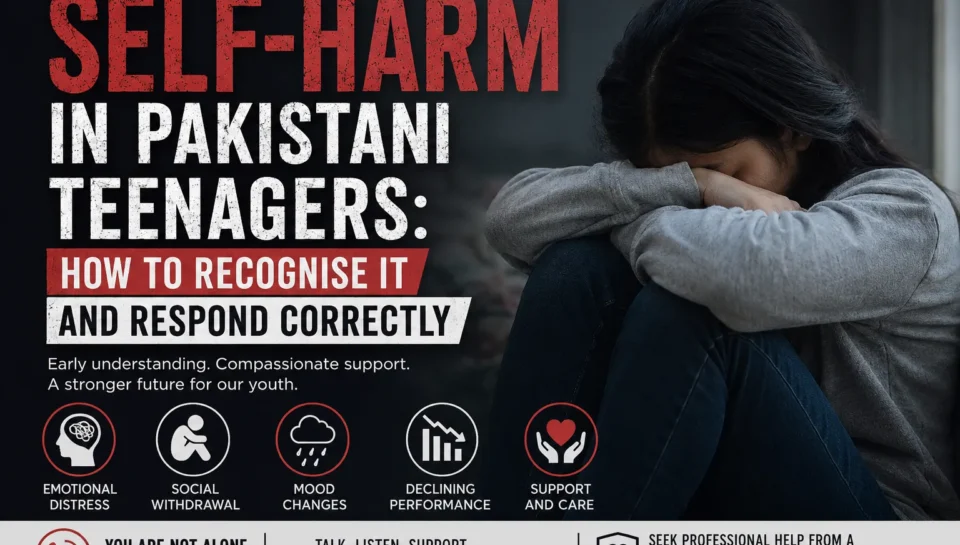
Self-Harm in Pakistani Teenagers: How to Recognise It and Respond Correctly
Teenage mental health is becoming a growing concern in Pakistan, yet many families still find it difficult to talk openly about emotional struggles. In this guide, you’ll learn how to recognise warning signs of serious emotional distress in teenagers, how to respond with compassion, and when professional support from a trusted psychiatric treatment centre or rehab center Islamabad may be helpful.
Many young people suffer silently because they fear judgment, criticism, or disappointing their families. Early understanding and supportive conversations can make a significant difference in a teenager’s well-being and future.
Why Teenage Mental Health Needs More Attention in Pakistan
Mental health awareness has improved over the past few years, but stigma remains a major challenge.
Many parents still view emotional struggles as a phase that teenagers will simply outgrow. While some mood changes are normal during adolescence, persistent distress should never be ignored.
Teenagers today face pressures that previous generations did not experience, including:
- Academic competition
- Social media influence
- Cyberbullying
- Family expectations
- Economic uncertainty
- Identity and relationship challenges
These factors can contribute to anxiety, depression, and emotional isolation.
Understanding Emotional Distress in Teenagers
Emotional distress is not a sign of weakness.
It often reflects a young person’s difficulty in managing overwhelming feelings or stressful life experiences.
Teenagers may struggle to express emotions such as:
- Sadness
- Fear
- Anger
- Loneliness
- Frustration
- Hopelessness
When healthy coping mechanisms are missing, these feelings can become more intense over time.
Why Many Pakistani Teenagers Remain Silent
Cultural expectations often discourage open discussions about mental health.
Young people may fear:
- Being labeled as weak
- Bringing shame to the family
- Being misunderstood
- Facing criticism from relatives
- Losing trust within their social circles
As a result, emotional problems often remain hidden until they become more serious.
Creating safe, judgment-free environments at home encourages teenagers to seek help earlier.
Warning Signs Parents Should Recognise
Every teenager behaves differently, but some changes deserve careful attention.
Sudden Mood Changes
Persistent emotional shifts may include:
- Irritability
- Increased sadness
- Frequent crying
- Anger
- Emotional withdrawal
Parents should pay attention when these behaviors continue for several weeks.
Social Isolation
Teenagers experiencing emotional difficulties may withdraw from:
- Friends
- Family gatherings
- Sports activities
- Religious events
- Hobbies they once enjoyed
Isolation can increase feelings of loneliness and make recovery more difficult.
Changes in Academic Performance
Mental health challenges often affect learning and concentration.
Warning signs include:
- Declining grades
- Lack of motivation
- Poor attendance
- Difficulty completing assignments
- Loss of interest in future goals
Teachers are sometimes the first people to notice these changes.
Sleep Problems
Healthy sleep is essential for emotional well-being.
Parents should monitor:
- Insomnia
- Oversleeping
- Fatigue
- Difficulty waking up
- Changes in sleeping patterns
Poor sleep can worsen anxiety and depression.
Changes in Eating Habits
Emotional stress may also affect eating behaviors.
Common signs include:
- Loss of appetite
- Emotional eating
- Skipping meals
- Sudden weight changes
These physical symptoms sometimes reflect underlying emotional struggles.
Common Causes of Emotional Struggles Among Teenagers
Understanding potential causes helps families respond more effectively.
Academic Pressure
Many Pakistani teenagers face intense pressure regarding:
- Board examinations
- University admissions
- Career expectations
- Family responsibilities
Constant stress can significantly impact mental health.
Social Media Challenges
Digital platforms have transformed teenage life.
Negative effects may include:
- Unrealistic comparisons
- Cyberbullying
- Fear of missing out
- Sleep disruption
- Low self-esteem
Healthy screen habits are increasingly important for emotional balance.
Family Conflicts
Home environments strongly influence mental well-being.
Teenagers may struggle with:
- Parental conflicts
- Divorce
- Financial stress
- Loss of loved ones
- Communication problems
Supportive family relationships provide important protection against emotional difficulties.
Trauma and Bullying
Experiences such as bullying or traumatic events can leave lasting emotional effects.
Young people who experience persistent stress or trauma often require additional support to process their feelings in healthy ways.
How Parents Should Respond Correctly
Parents play the most important role in supporting teenagers.
Stay Calm
Emotional reactions from parents can make teenagers feel more fearful or isolated.
Approach conversations with patience and compassion.
Listen Without Judgment
Effective communication includes:
- Active listening
- Open-ended questions
- Empathy
- Validation of feelings
Simple statements such as “I’m here for you” or “You don’t have to face this alone” can provide comfort.
Avoid Blame
Mental health challenges are not caused by personal weakness or bad parenting.
Blaming a teenager may increase feelings of shame and discourage future communication.
Offer Support Rather Than Solutions
Sometimes young people simply need someone who listens.
Instead of immediately trying to fix problems, parents should focus on understanding their child’s experiences.
When Professional Help Is Needed
Some situations require expert intervention.
Parents should seek professional guidance if:
- Emotional distress continues for several weeks
- Daily activities are significantly affected
- Academic performance declines sharply
- Social withdrawal becomes severe
- Anxiety or depression symptoms worsen
Professional mental health care provides evidence-based support and coping strategies.
The Role of a Psychiatric Treatment Centre
A qualified psychiatric treatment centre can help teenagers and families understand underlying mental health conditions.
Services often include:
- Psychological assessments
- Individual counseling
- Family therapy
- Anxiety treatment
- Depression management
- Stress management programs
Early intervention improves long-term outcomes.
Choosing the Right Rehab Center Islamabad for Mental Health Support
Many families assume rehabilitation centers only address substance abuse.
However, modern facilities also provide comprehensive mental health services.
A trusted rehab center Islamabad or rehabilitation center Islamabad may offer:
- Adolescent counseling
- Family support programs
- Psychiatric evaluations
- Emotional wellness plans
- Long-term follow-up care
Choosing professional help early can prevent emotional challenges from becoming more severe.
Why Families Look for the Best Rehab Center in Islamabad
Parents naturally want the highest quality care for their children.
The best rehab center in Islamabad focuses on:
- Compassionate treatment
- Individualized care plans
- Confidential services
- Qualified mental health professionals
- Family involvement throughout recovery
These factors create safer environments for teenagers who need support.
Families searching for the best rehab in Islamabad often prioritize facilities that understand both cultural values and modern mental health practices.
Hayat Rehab Clinic and Mental Health Support
Organizations such as Hayat Rehab Clinic and Hayat Rehab Center recognize the importance of adolescent mental health awareness and family-centered care.
Comprehensive services provided by a professional addiction treatment centre or mental health facility may include:
- Psychological counseling
- Family education
- Emotional resilience training
- Stress management support
- Ongoing recovery planning
Residents may also explore a trusted rehabilitation centre in Rawalpindi if specialized adolescent services are available closer to home.
Building Emotional Resilience in Teenagers
Parents can help children develop healthier coping skills.
Encourage Physical Activity
Exercise improves mental well-being by reducing stress and anxiety.
Activities may include:
- Cricket
- Football
- Walking
- Swimming
- Cycling
Physical activity also improves sleep and confidence.
Promote Healthy Communication
Families should create regular opportunities for open conversations.
Simple daily check-ins help teenagers feel heard and valued.
Limit Screen Time
Balanced technology use supports emotional wellness.
Parents can encourage:
- Family meals without phones
- Outdoor activities
- Reading
- Creative hobbies
These habits strengthen real-world connections.
Teach Problem-Solving Skills
Helping teenagers navigate challenges independently builds resilience and confidence.
Young people benefit from learning healthy ways to manage setbacks and difficult emotions.
Breaking the Stigma Around Mental Health
One of the greatest challenges in Pakistan remains the stigma surrounding psychological support.
Seeking help should be viewed no differently than visiting a doctor for physical health concerns.
Open conversations in families, schools, and communities encourage earlier intervention and healthier outcomes.
Changing attitudes toward mental health benefits everyone.
A Story of Hope
Consider a common example.
A teenage student begins struggling academically after experiencing significant stress at school.
Instead of criticizing poor performance, the parents choose to listen carefully and encourage counseling.
With professional support, improved communication, and family involvement, the teenager gradually regains confidence and develops healthier coping mechanisms.
This example illustrates how compassion and early action can change lives.
Conclusion
Emotional distress among Pakistani teenagers deserves greater awareness and understanding. Recognizing warning signs early, listening without judgment, and encouraging professional support can help young people overcome difficult challenges.
Whether families seek guidance from the best rehab center in Islamabad, a trusted rehabilitation center Islamabad, an experienced psychiatric treatment centre, or respected providers such as Hayat Rehab Clinic and Hayat Rehab Center, early intervention remains one of the most important factors in protecting teenage mental health.
Key Takeaways
- Emotional struggles in teenagers should never be ignored.
- Warning signs include social withdrawal, mood changes, and declining academic performance.
- Parents should respond with empathy rather than criticism.
- Professional mental health support can provide effective coping strategies.
- Family involvement is essential for recovery and resilience.
- Reducing stigma encourages more young people to seek help early.
- The best rehab in Islamabad often combines mental health expertise with compassionate, family-centered care.
Take the Next Step
If your teenager is experiencing emotional challenges, don’t wait for the situation to worsen. Reach out to a qualified mental health professional, start an open conversation, and explore available support services. Share this article with other parents to help create greater awareness about teenage mental health in Pakistan.
Disclaimer: This article is intended for educational purposes only and should not replace professional medical or psychological advice. If you are concerned about a teenager’s safety or mental health, consult a qualified healthcare professional or mental health specialist as soon as possible.